Himalayan Heights: 2009 Mera Peak Expedition & Kathmandu Guide

From the Diary of Braco Babić:

Text and Photography by: Braco Babić

My long-held desire to visit the Kingdom of Nepal and trek through the world’s greatest mountain range—the Himalayas—became a reality quite unexpectedly. Shortly after returning from Turkey and summiting Ararat (5137 m a.s.l.) on August 30, 2009, I arrived home in Sarajevo and immediately applied for the expedition to Mera Peak (6476 m a.s.l.).

Joining me from Bosnia and Herzegovina were four fellow mountaineers: Jovo Elčić, Bobana Petrović, Redžep Grabus, and Sanja Mitrović.

The expedition was organized by the “Extreme Summit Team” (EST) from Belgrade. In recent years, EST has sparked a true renaissance in regional mountaineering, leading many climbers from BiH to world-renowned peaks such as Island Peak (6189 m a.s.l.), Ama Dablam (6856 m a.s.l.), Aconcagua (6962 m a.s.l.), Cho Oyu (8201 m a.s.l.), Manaslu (8163 m a.s.l.), and Mount Everest (8848 m a.s.l.).

The Path Less Traveled

What drew us to Mera Peak was the departure from the standard, mass-market trekking rutes. Unlike the popular trails toward Everest Base Camp, Kala Patthar, or Island Peak—where hikers stay in lodges and yaks transport supplies—our route was significantly more demanding.

We operated in expedition style: we slept in tents, managed our own mobile kitchen, and relied on the strength of the participants and our Sherpa porters rather than pack animals. While the classic ascent from the north side is primarily a high-altitude glacier trek, the southern and western approaches are technically much more challenging.

The Mystery of the Summit Height

An interesting detail for any cartography enthusiast is the discrepancy in official measurements for Mera Peak. According to the Nepal Mountaineering Association (NMA), it is the highest peak classified for trekking.

On our official climbing permit and the “Makalu-Barun National Park” map, the elevation is listed as 6654 m a.s.l. * However, on the maps we purchased in Kathmandu, the height is noted as 6476 m a.s.l.

Historical Legacy

The first successful ascent of Mera Peak took place on May 20, 1953, by Colonel Jimmy Roberts and Sen Tenzing. The region was first explored in the early 1950s by legendary British expeditions—the same pioneers who reconnoitered Mount Everest—including Edmund Hillary, Eric Shipton, and George Lowe.

October 12, 2009: Sarajevo – Beograd – London – Delhi

Our journey began in the early morning hours, departing Sarajevo at 04:00 AM for Beograd. By noon, we arrived at the “Nikola Tesla” Airport in Surčin, where we joined the rest of the expedition team.

The full team consisted of: Miloš Ivačković (Expedition Leader), Aleksandar Spasić and Sandra Božić (Beograd), Milan Kurilić and Dragan Malinović (Novi Sad), The five of us from Bosnia and Herzegovina.

In total, there were ten of us who would spend the next 24 days together in far-off Nepal. “Far-off” is perhaps an understatement—as we soon realized just how long the journey truly is. Since there are no direct flights from Europe to Kathmandu, our route took us from Beograd to London (a 3-hour flight), where we boarded our connecting flight to Delhi.

October 13, 2009: Delhi – Kathmandu

After a 12-hour flight, we arrived in Delhi at 06:00 AM. We spent the next six hours in the transit lounge waiting for our connection. The three-hour flight from Delhi to Kathmandu passed quickly, thanks to a bird’s-eye view of the Indian landscape—crisscrossed by mighty rivers and endless green fields—eventually giving way to the snow-capped peaks of the Himalayas.

With great anticipation, we waited to land in the land of the snow leopard, the mysterious Yeti, the red panda, yaks, and the legendary Sherpas, just as the travel guides describe.

Upon arrival in Kathmandu, we were greeted by sweltering heat and long queues for passport control and visas. Despite the exhaustion of the long journey, everyone was in high spirits. We laughed at Redžep’s joke regarding the intricate wood carvings decorating the airport interior: “I guarantee the craftsmen from Konjic carved this!” (referring to the famous woodcarving tradition in Bosnia).

A thirty-minute minibus ride took us from the airport to Hotel Vajra. High walls and lush green vegetation hide the hotel from the outside world; monkeys jump from branch to branch in the hotel park as if in a real jungle. The main building and its annexes are constructed of red brick and carved wood, giving the entire estate the appearance of an old castle. We reached our rooms via stairs, huffing and puffing under the weight of heavy backpacks and transport bags, as the hotel has no elevator.

The Pulse of the Capital

We set out to explore Kathmandu late in the afternoon. Founded in the 13th century, the capital of the Kingdom of Nepal sits at 1300 m a.s.l. in the center of a fertile valley at the confluence of the Baghmati and Bishanmati rivers. Since the 1970s, it has been a major hub for tourism and a pilgrimage center for Hindus and Buddhists. With nearly one million residents (double that including the suburbs), it unfortunately sits on the list of the ten most polluted cities in the world.

We reached Thamel, the popular tourist and commercial district, via dusty streets cluttered with piles of trash. The streets have no sidewalks, so pedestrians move alongside cars, motorcycles, cyclists, and rickshaws in a chaotic flow of traffic from both directions. To avoid being hit, our reflexes had to be as sharp as a cat’s. Surprisingly, despite the chaos, there were no accidents; everyone—drivers and pedestrians alike—was smiling, with no signs of anger or quarreling.

With Miloš, who had visited Kathmandu several times before, we toured the mountaineering and alpinism equipment shops. The selection is massive, ranging from stores selling original global brands to shops with skillfully made local copies. The prices for originals are the same as in Europe with no room for bargaining, whereas the prices for the “knock-offs” can be negotiated significantly. This first tour was purely informational; we saved the serious shopping for tomorrow.

A Birthday in the Dark

We had dinner at “Helena’s,” a restaurant in the heart of Thamel located in a building that towers over the rest of the city. We ate in the rooftop garden, which offers a wide selection of both national and European dishes.

In the middle of dinner, the power went out. The fairytale image of the city, illuminated by thousands of colorful lights, instantly vanished into darkness. Kathmandu has long suffered from electricity and water shortages, with sudden, unannounced reductions. The staff didn't miss a beat, quickly firing up the restaurant’s generator.

During dinner, I received a birthday message from my wife. I must admit, celebrating a birthday in the middle of Kathmandu isn't a cheap affair when it comes to treating your friends, but it’s a rare occasion that deserves a proper celebration!

Back at the hotel, we went to bed early, exhausted by the travel and the sensory overload of the shops. By morning, we finally understood why the local dogs spend the entire day napping in the sun on the streets: they didn't close their mouths all night, barking incessantly until dawn.    

October 14, 2009: Kathmandu

We spent the day purchasing the final pieces of mountaineering equipment we were missing. Upon returning to the hotel in the evening, we were occupied with packing until the late hours. The weight of our transport bags had to be limited to 20 kg, while our backpacks were kept to 10 kg. We double-checked the weight on the hotel scale to ensure we met the strict baggage allowance for the flight to Lukla. Anything unnecessary for the expedition was stored in the hotel's luggage room for safekeeping until our return.

October 15, 2009: Kathmandu – Lukla

Finally, today we depart for the Himalayas. We rose at 04:00 AM to beat the infamous traffic and reach the airport without delay. At the domestic terminal, we struggled through the crowds, heavily burdened by our expedition gear. After a smooth weigh-in and check-in process, we boarded our flight to Lukla. The aircraft is small, carrying only 15 passengers and 3 crew members. Before takeoff, the flight attendant handed out cotton earplugs and candy, though neither helped much against the deafening roar of the engines.

Many stories exist about the flight to Lukla, having long since become part of Himalayan legend. The short runway, only 457 m long and slightly sloped, is tucked between two mountain peaks. It requires pilots to have specialized training: you land “uphill” toward a vertical rock wall and take off “downhill” directly into a deep gorge. Because of this, the “Tenzing-Hillary” Airport (renamed in 2008 after the first conquerors of Mount Everest) is considered the most dangerous airport in the world. A clear morning guaranteed us a magnificent aerial view of the Himalayan giants before landing safely at 07:00 AM.

Life in the “Gateway to the Himalayas”

We settled into the “Paradise Lodge,” located right next to the air traffic control tower. Lukla (2843 m a.s.l.) sits east of Kathmandu, consisting of about a hundred stone houses on a narrow plateau. Until 1977, this was a remote outpost, ten days’ walk from the nearest transport. The airport's construction, driven by the initiative of Edmund Hillary and Tenzing Norgay, brought a prosperity that continues today.

The main street of Lukla hums like a beehive. Porters, loaded livestock, tourists, Buddhist monks, and street musicians all converge here. A unique sight is the outdoor gambling tables where people play a Nepalese version of “barbut” with incredible passion—everyone participates, from the elderly to young children. While the shops offer goods from all over the world, there are few buyers, as most people stock up in Kathmandu where prices are significantly lower.

The Crossroads

Two major paths diverge from Lukla:

  1. The first leads to Namche Bazar and toward Everest Base Camp.
  2. The second leads over the Zatrwa La pass toward our objective—Mera Peak.

While dining at the lodge, we were surrounded by photos of world-famous climbers who have stayed here. Interestingly, we even spotted a poster of the Serbian singer Vlado Georgiev, who filmed a music video in this region. We ended our day with an “Everest” beer (650 ml), promising to toast here again upon our return, regardless of whether we reach the summit of Mera Peak.

October 16, 2009: Lukla – Chutanga

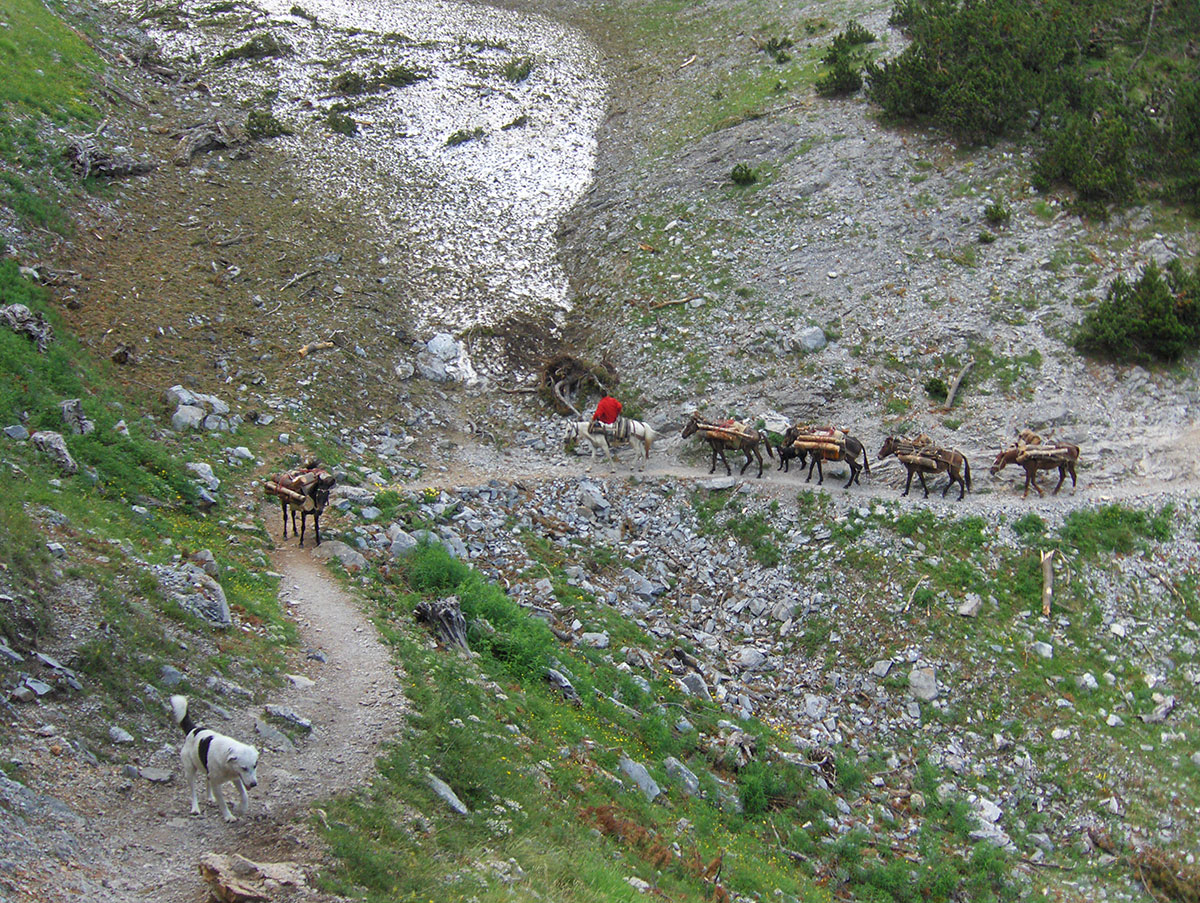
Early in the morning, we were awakened by the commotion of our guides and porters busily preparing for today’s ascent to the village of Chutanga, where we will stay for the next two days and nights for acclimatization. The porters set off before us, heavily burdened with our transport bags, tents, mobile kitchen, dining equipment, food supplies, and camping gear. We were in awe of their strength and endurance; carrying such loads (40–50 kg) on a steep, narrow trail for kilometers is a feat most of us couldn't sustain for even a hundred steps.

We departed Lukla at 09:00 AM, led by Sherpa Angelo Lakpa and Miloš Ivačković. Our path took us past a local hospital and two small hamlets. Outside the stone huts, small children were playing, and we handed out candies and chocolates. During a rest stop, we watched with amazement as one of our young Sherpa porters washed his hair in the ice-cold water of a mountain stream.

The local dwellings are built of stone with roofs made of stone slabs, bamboo leaves, or reeds. Small, terraced gardens yielded crops of cabbage, potatoes, carrots, turnips, and onions. When not tending to their gardens or livestock on nearby pastures, the villagers sell hot and cold drinks to passersby. Even here, globalization is visible through products like Coca-Cola, Heineken, Marlboro, and Johnnie Walker. As we climbed higher, nature became more bountiful, crossing swift streams and beautiful waterfalls. After nearly four hours of hiking, we reached Chutanga.

Arrival at Chutanga

Chutanga (3450 m a.s.l.) is situated beneath sharp, snow-white peaks that pierce the crystal-blue sky. Several lodges are arranged on terraces, one above the other. They are built of stone, and some even proudly bear the sign “HOTEL” on their facades.

Our porters arrived ahead of us, and soon the pleasant aroma of cooking drifted from our mobile kitchen. The meals were delicious, high in calories, and served in generous portions tailored to our needs. We spent the afternoon resting in our tents.

While for most of the team the Himalayan adventure truly began with the flight to Lukla, mine took a turn at a nearby stream. While washing my socks, I slipped and fell in. Luckily, only my right leg went in up to the knee. I reacted quickly, ran to my tent, and took my wet boot and trousers to a nearby hut, asking the hosts to dry them by their hearth. For the rest of the day, I had to wear one of Mića’s slippers. I must have looked quite strange to the locals and other hikers, as everyone smiled when I walked by—a first lesson for me to be much more careful in the future!

By evening, the wind swept the fog away, and the camp was bathed in soft moonlight. We went to bed early to be rested for the challenges of the next day.

October 17, 2009: Chutanga

In the morning, I visited the hut where I had left my trousers and boot to dry. The trousers were ready, but the boot was still damp. I decided to use a time-tested mountaineering trick: I pulled on double wool socks and wrapped them in plastic bags before sliding them into the boot. Suitably equipped, I joined the rest of the team, and at 10:00 AM, we set off on our first acclimatization climb.

We ascended a steep trail onto a ridge covered with sparse rhododendron forests and shrubs similar to our native mountain pine (klekovina). During the climb, Miloš gave us vital instructions: move slowly, breathe deeply, maintain the group's pace without unnecessary stops, and stay hydrated during rest breaks. As a highly experienced guide—with summits including Mount Everest, Kabru IV, Island Peak, Aconcagua, and Elbrus—we listened to his every word with great care.

Upon clearing the forest, we reached a viewpoint where my altimeter showed we had reached 3850 m a.s.l. From this vantage point, Angelo pointed out the Zatrwa Og pass (4538 m a.s.l.), which we are scheduled to cross tomorrow on our way toward Mera Peak. We returned to camp in the afternoon after 4.5 hours of trekking.

The Expedition Team

Before lunch, our Head Sirdar (lead Sherpa), Nima, introduced the support crew that will be with us for the duration of the expedition: Assistant Guides: Angelo Lakpa, Ramis, and Temba; Kitchen Staff: Head cook Hasta Tamang and his five assistants (Rindži, Navan, Maranč, Purba, and Nima); Porters: 16 high-altitude porters. In total, 26 Sherpas are supporting our team of ten, ensuring every aspect of our survival and progress in the mountains is managed.

Later in the day, I walked down to the hut by the stream to photograph an elderly local man. He was skillfully slicing bamboo reeds into thin strips with a large knife, weaving them into the traditional baskets used by high-altitude porters. Following dinner, we headed to our tents as soon as darkness fell. Tomorrow promises to be a grueling day.

October 18, 2009: Chutanga – Kharka Teng – Zatrwa Og – Zatrwa La – Thuli Kharka

We rose with the first rays of the sun, feeling well-rested after nearly 12 hours in our tents. Despite it being Sunday, the camp was buzzing with energy as we prepared for today's ascent. At 08:00 AM, we left Chutanga, crossing the shaky little bridge over the stream where I had slipped two days ago—this time with much more caution.

After 2.5 hours of trekking, we reached the huts at Kharka Teng (4020 m a.s.l.). From here, a wide panorama opens up over the valley where Lukla lies. This vantage point also gave us our first clear look at the pass we had to conquer. After a short rest, we continued the climb. The trail reminded us of the Strmenica path on Čvrsnica back home, though this one was significantly longer and steeper.

As we climbed, we encountered porters and trekkers returning to Lukla. When passing them, we carefully stepped aside to give the porters the right of way; a single bump from their large baskets could easily send a climber tumbling down the steep slope.

Crossing the Twin Passes

At 12:30 PM, we reached the first pass, Zatrwa Og (4538 m a.s.l.), which was adorned with colorful Buddhist prayer flags. After a long break, we traversed the ridge along the mountainside toward the next pass, Zatrwa La (4613 m a.s.l.). This second pass was also draped in prayer flags fluttering in the wind, making it a perfect subject for our cameras.

The traverse between the two passes took nearly an hour. This divide marks the border between two great valleys: Solo Khumbu and the Hinkhu Valley. Just below the pass sits a small hut with a sign pompously labeled “TEA SHOP.” We stopped in and were welcomed by a bright, smiling young woman. Inside the smoke-filled room, we rested and warmed ourselves with hot tea. We also took a moment to congratulate Saša and Sandra, as this was the highest elevation they had ever reached.

Descent to Thuli Kharka

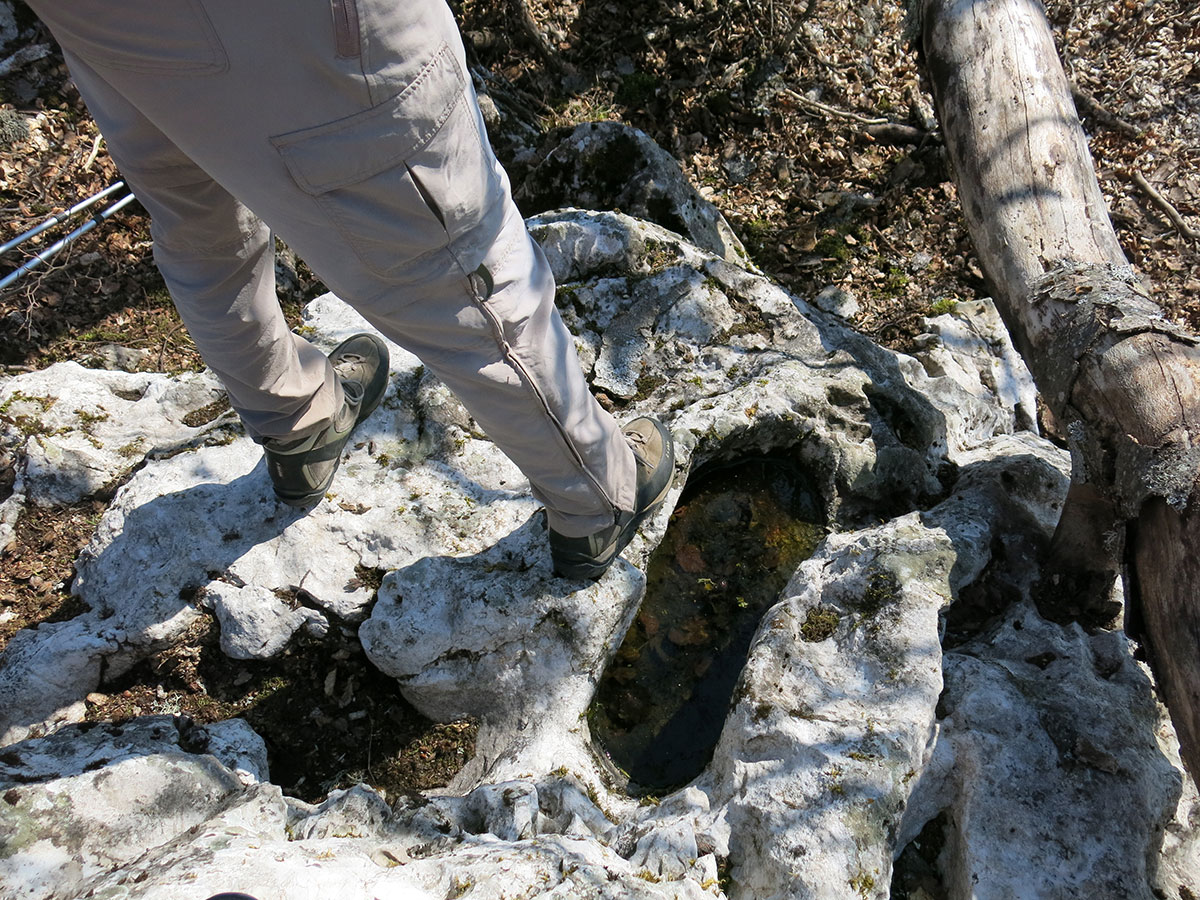
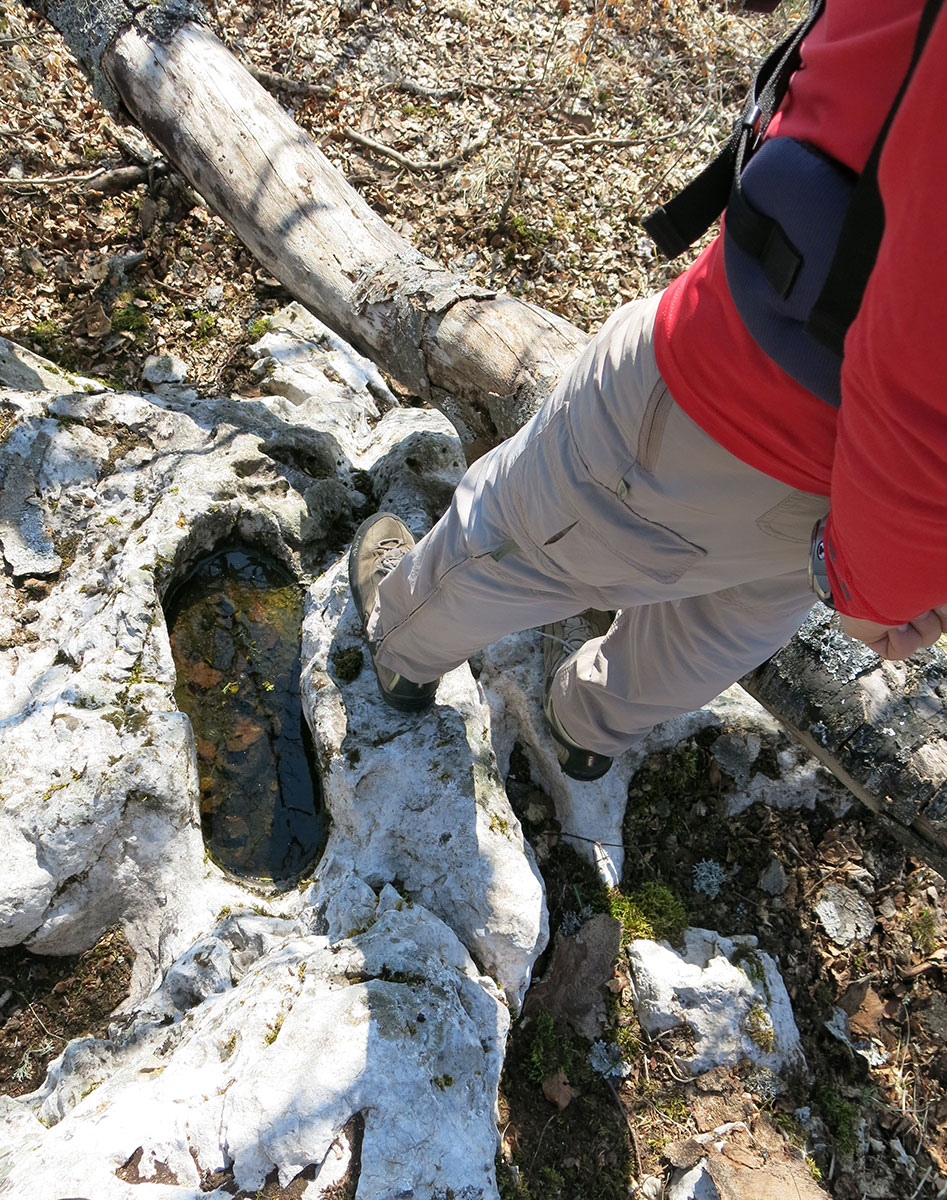
From the pass, we began our descent toward Thuli Kharka (4233 m a.s.l.), a small village nestled on a terraced plateau beneath a giant boulder. At the top of this massive rock is a large hollow filled with water, looking much like a tiny lake. We reached the village in just one hour from the pass.

By early evening, the wind died down, and a thick fog rolled in. Our tents were already pitched on two terraces near a newly built large lodge in the center of the village. Dinner followed shortly, and then we retired to our tents for much-needed sleep.               

October 19, 2009: Thuli Kharka – Taktor – Tashing Dingma – Tashing Ongma – Mosom Kharka

Upon waking, we were pleased to find that no one was complaining of headaches. Last night, as a preventative measure for the increasing altitude, we each took an Aspirin (100 mg) before bed. This is a practice we intend to continue until our final summit push.

After breakfast, feeling rested and in high spirits, we began our fourth day of trekking. From Thuli Kharka, we traversed a steep slope to reach a pass marked by a stone cairn (pyramid) adorned with prayer flags. We rested there alongside numerous porters who appeared exhausted by their heavy loads. Despite the physical toll, the smiles never left their faces. Most were sparsely dressed, wearing torn sneakers or plastic sandals; some were even barefoot.

Our guides explained the harsh reality of their lives. Trained from childhood to carry loads at high altitudes, many porters turn to energy supplements as their strength wanes with age. The gold-yellow wrappers of these “energizers” are scattered along the trail. The guides warn us that while these offer a temporary boost, they are highly addictive and cause long-term damage to the body. Consequently, most porters are forced to retire by the age of fifty.

The “EKG” Trail

From the pass, we descended a steep path through dense rhododendron forests to the Taktor lodge (3809 m a.s.l.), situated on a terrace near a stream with beautiful waterfalls. This leg took 2.5 hours. After lunch by the water, we continued our descent into a forest of Himalayan pine. In some areas, the forest was so lush it resembled a jungle.

We passed the Tashing Dingma and Tashing Ongma lodges, and after two hours, we reached the high banks of the Inghu Khola river (3442 m a.s.l.). We watched the churning, frothing water as we moved along the right bank. The trail here constantly gains and loses 100–200 meters of elevation—moving “up and down” so frequently that we nicknamed it the “EKG” trail, due to its resemblance to an electrocardiogram readout. We reached our destination, Mosom Kharka, in another hour.

Mosom Kharka and Political Reality

Mosom Kharka (3575 m a.s.l.) serves as the entrance to the Makalu-Barun National Park. Our guides informed us that this small village has become a Maoist stronghold used to monitor the valley's routes. Despite our official government permits, agencies are often forced to pay an additional “tax” to the Maoists for passage. Posters featuring the five-pointed star, the sickle and hammer, and the face of Mao Zedong on lodge facades made their presence very clear.

Before dinner, we explored the village, which consists of several lodges and shops. In one shop, you can buy yak meat. Because of the constant cold and lack of insects, the meat can stay “fresh” for weeks without spoiling. Just like in Lukla, gambling is popular here; porters passionately wager their hard-earned money at outdoor tables, though they rarely win. One shop even offered a satellite phone, with the owner determining the price per minute based on his “estimation” of the customer's ability to pay.

As darkness fell, the temperature dropped significantly. We had dinner inside a lodge where we were charged for heating before the stove was even lit. Wood is a scarce and expensive commodity at this altitude, so dried yak dung is often added to the fire to make the logs last longer. After dinner, one of our Sherpas sang while playing the madal—a traditional Nepalese drum similar to a tarabuka. Though the music was beautiful, exhaustion won, and we soon retreated to our tents and warm sleeping bags. 

October 20, 2009: Mosom Kharka – Taure – Tangnag

Today we set off at 09:30 AM, slightly later than usual. Our destination is the village of Tangnag, a five-hour trek from Mosom Kharka. The first leg of the journey follows the valley of the Inghu Khola (also known as the Hinku Khola) river. The riverbed is incredibly wide—larger than the river itself. To our left, we are flanked by pine forests, while to our right, the vertical rock walls of Mera Peak tower over us.

We moved along the edge of the riverbed, navigating around massive boulders that had tumbled down from the eroding banks. Every now and then, we looked up with a bit of anxiety at the rocks hanging precariously above our heads, seemingly ready to fall at any moment.

After two hours of hiking, we left the riverbed and ascended onto a plateau of high pastures. Within half an hour, we reached Taure (3990 m a.s.l.). On a dirt terrace in front of one of the three huts that make up this tiny settlement, the Sherpas served us lunch. A cold, biting wind forced us to eat quickly, pack up, and keep moving.

Into the Himalayan Heart

As we continued, we passed three massive trail markers (cairns) made of stacked stones. For the first time on this trek, we encountered a herd of yaks grazing peacefully. This was exactly the experience we had hoped for: fascinating peaks surrounding the valley, streams and waterfalls crashing into the frothing river, and yaks on the pastures. When we suddenly stumbled upon patches of Edelweiss (runolist), we were overjoyed. We were finally in the heart of the true Himalayan wilderness—the very reason we came here.

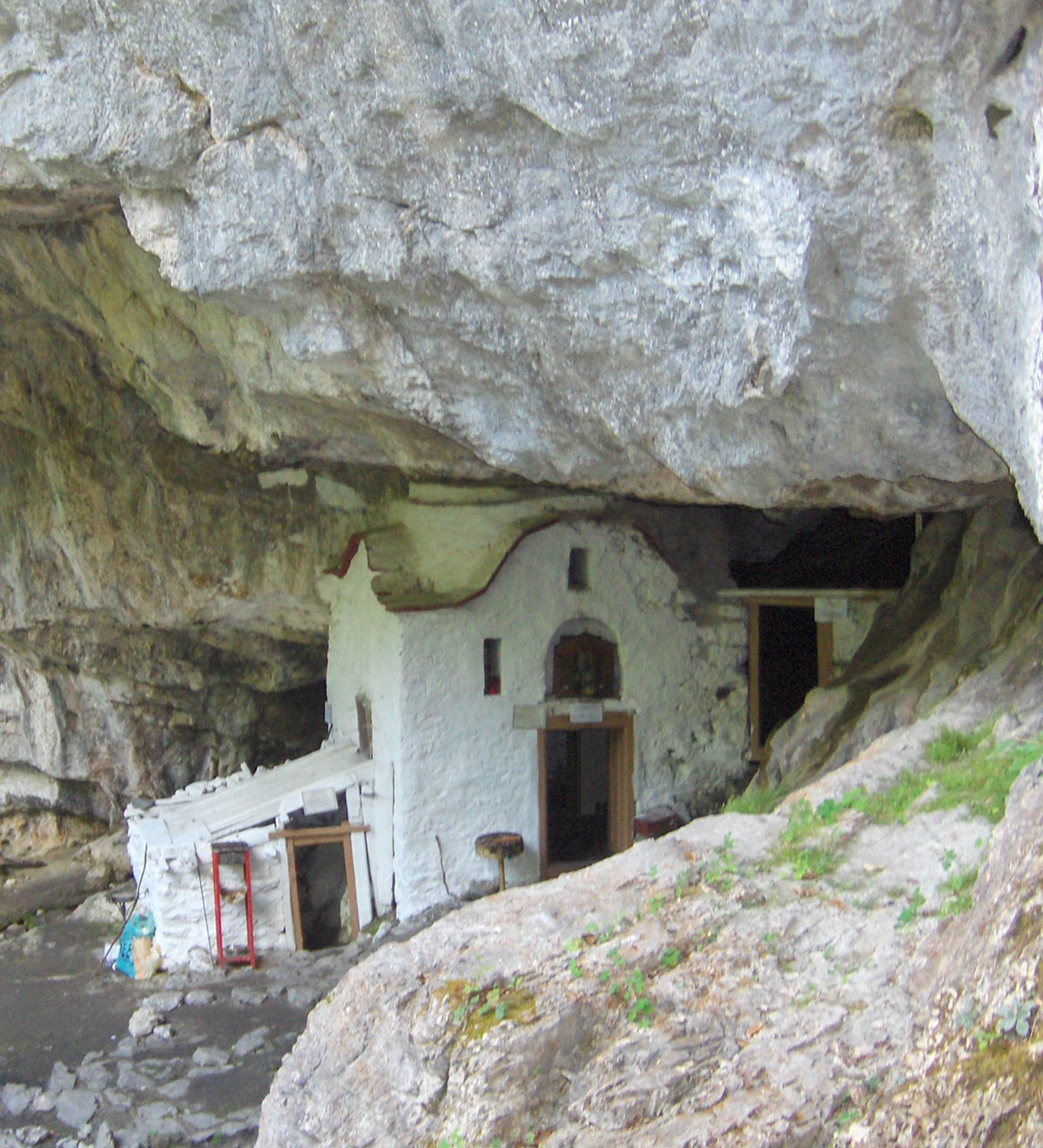
An hour and a half from Taure, we reached a Gompa (a small Buddhist temple) at 4100 m a.s.l. The temple is built directly under a massive overhanging rock, enclosed by wooden boards and stone walls. The rock face inside is painted with motifs from the lives of Buddha and Rinpoche, with a small altar holding a photograph of the Dalai Lama deep within. The ceiling is draped in prayer flags, and a taxidermied eagle hangs from one of the walls.

The resident monk was away due to illness, so our Sirdar, Nima, performed the traditional ceremony. He lit an oil lamp for each of us on the altar to wish us a successful summit. We placed some money into a locked metal box to help maintain this wondrous “temple at the end of the world.”

Arrival at Tangnag

On the final stretch to Tangnag, our eyes were fixed on the stunning peaks of the Kyashar Himal massif—sharp, daring pyramids that looked more challenging and beautiful than the last. We reached Tangnag one hour after leaving the Gompa. We will stay here for the next three days to acclimatize properly and gather strength for the final push.

After dinner, we gathered in the lodge with a group of Italians who were heading to Khare the next day. Unlike the quiet of previous nights, tonight was filled with music. We sang songs from Italy and the former Yugoslavia (from Triglav to Ohrid), including several Bosnian Sevdalinkas. The highlight of the evening was Malina (Dragan), who earned a massive round of applause for his solo performance of the Macedonian classic, “Zajdi, zajdi.” We finally retreated to our tents late in the evening.

October 21, 2009: Tangnag

Today was dedicated entirely to acclimatization. We set out from Tangnag (4263 m a.s.l.) under a beautiful, clear sun. As we slowly ascended the steep slopes, our eyes were magnetically drawn to the neighboring peaks of the Kyashar Himal massif: Tangtse (6770 m a.s.l.), East Summit (6373 m a.s.l.), and Cairn (5271 m a.s.l.).

Behind us, on the opposite side of the Hinkhu Valley, the western face of Mera Peak towered into the sky. Every so often, the heavy thunder of avalanches crashing into the valley below echoed through the air. After 3.5 hours of steady hiking, we reached an unnamed ridge point at an elevation of 5067 m a.s.l. We took a brief 30-minute rest at the top before descending back to Tangnag.

By the time we reached camp, we were starving. Miloš told us that a strong appetite is actually one of the primary signs of successful acclimatization. According to him, the most reliable indicators that your body is adapting—besides a good appetite—are sleeping without a headache and maintaining regular digestion.

Songs of the Himalayas

In the evening, we gathered in the lodge with our Sherpas. Accompanied by the rhythmic beat of the madal, they sang traditional Nepalese songs for us. Sherpa Angelo Lakpa translated the lyrics, and we were surprised to find how similar they are to our Bosnian Sevdalinkas—they tell stories of love, unrequited longing, yearning, and solitude. Later, the lodge owner put on some more upbeat music on the cassette player, and the night ended with everyone dancing.

October 22, 2009: Tangnag

The morning began with the rhythmic thumping of helicopter blades. During the day, it intervened twice to rescue climbers whose lives were in danger. Someone needed emergency help in Khare, and later, a helicopter arrived in Tangnag to evacuate a member of the Italian expedition. It was a sobering reminder of how quickly things can change—she had been singing and dancing with us in the lodge just last night but was now showing severe signs of altitude sickness.

We used this day for rest, personal hygiene, and laundry. The lodges here offer stone-walled shower cabins, but they are unheated. I gritted my teeth and stepped into one, but after five minutes of showering, I bolted back to my tent. It was hauntingly cold, and it took me a long time to warm up again. After that “experiment,” I swore off bathing until our return to Kathmandu.

The Ghost of Saba Tsho

In the afternoon, we went for a walk to explore the surroundings. Tangnag consists of a large number of newly built lodges. Only a few years ago, the settlement was hit by a catastrophe: a massive avalanche plunged into the nearby Saba Tsho lake (4463 m a.s.l.) to the north. The impact created a wall of water so powerful that it breached the moraine wall holding back the lake. The resulting flood completely wiped out the village. Fortunately, there were no casualties, as the disaster occurred outside the climbing season.

We spent the rest of our time before lunch checking our technical climbing gear. By late afternoon, the quiet of the village vanished as a loud and bustling group of Iranians and French climbers arrived.

A Celebration in the Clouds

In the evening, our head cook surprised us with a cake, on which he had written “Mera Peak 2009” in whipped cream. Miloš carefully cut the cake into 36 equal slices so that every member of the expedition—participants and Sherpas alike—could enjoy a sweet treat.

October 23, 2009: Tangnag – Khare

We departed Tangnag around 09:00 AM for Khare, a leg that requires us to gain about 600 meters in elevation. The route continues through the Hinkhu Valley. Once again, we were delighted to see clusters of Edelweiss (runolist) growing along the trail, this time accompanied by a beautiful light-blue flower resembling Koch's Gentian. After leaving the riverbed and crossing the high pastures, we faced a steep and strenuous climb to Khare, arriving after 3.5 hours of trekking.

Khare (4890 m a.s.l.) is a proper small settlement, featuring several large lodges and tiny 2×2 meter shops. It is the largest settlement we have visited so far and, in my opinion, the most beautiful due to its location. From the wide, long terraces where about twenty lodges are situated, one can enjoy a magnificent view of the Hinkhu Valley and its surrounding peaks. It is from here that we caught our first glimpse of two of the three highest summits of the massif: Mera Peak Central (6476 m a.s.l.) and Mera Peak North (6347 m a.s.l.).

Pushing Higher

After lunch and a bit of rest, Redžep, Sanja, and I set out for an afternoon acclimatization climb on a nearby ridge, reaching an elevation of 5170 m a.s.l. From this vantage point, we had an extraordinary view of the Mera La pass, which serves as the gateway to the highest peaks of the massif.

Upon returning to Khare, we found the Iranians and French teams busy pitching their tents. At dinner, we sat with a group of climbers from England and Singapore. They were understandably dejected; they were heading home without reaching the summit. They had attempted the climb twice, but fierce winds had blocked their path both times.

October 24, 2009: Khare

We spent the morning on the ridge above the settlement performing final technical checks on our climbing gear. This involved practicing descents on fixed ropes to ensure everyone was comfortable with the equipment. After lunch and some rest, we began the meticulous process of packing our rucksacks for the coming days.

In the afternoon, Sherpa Ramis, one of our guides, arrived with good news: the team had successfully transported and pitched the tents at High Camp. Everything is now in place for our final summit push on Mera Peak. We spent the evening in the lodge sharing stories with Russian and Czech climbers who, like us, are moving up to High Camp tomorrow.

Before retreating to our tents, we stood for a moment staring at the sky, which was thick with a blanket of stars. We couldn't help but wonder what the weather would hold for us. Sleep was hard to find; the air was thick with anticipation. Tomorrow, the final ascent to the summit of Mera Peak Central begins—the very goal that brought us to Nepal and the Himalayas.

October 25, 2009: Khare – Mera La – High Camp

The tenth day of our journey dawned beautiful and sunny. At 09:00 AM, we departed for High Camp. The trail began with a steep climb over sharp, rocky terrain leading to a small hollow with a solitary hut. Just like at the Zatrwa La pass, we were greeted by a cheerful, smiling young woman. I am not sure if a higher tea shop exists in the world, but at 5045 m a.s.l., this is certainly the highest place I have ever sat down for tea.

After a short rest, we continued over the rocks and soon reached the glacier at 5100 m a.s.l. We donned our crampons and ascended the frozen slope. The terrain eventually leveled out into a vast, wide plateau with a well-trodden path. Sherpa Angelo Lakpa and Miloš warned us to stay strictly on the trail due to the hidden crevasses scattered across the surrounding ice.

The Gateway to the Summit

We reached the Mera La pass (5450 m a.s.l.) and took a break for lunch. From the pass looking south, we could clearly see High Camp (5750 m a.s.l.), our target for the day. To the right stood the three snowy pyramids of the Mera Peak massif: Mera South (6064 m a.s.l.), Mera Central (6476 m a.s.l.), and Mera North (6347 m a.s.l.). Slightly below the pass to the east lies Base Camp (5350 m a.s.l.), which serves as the approach for both Mera Peak and the neighboring Baruntse (7129 m a.s.l.).

At this point, Dragan Malinović made the difficult decision to return to Khare. He explained that he was feeling unwell. It was surely a hard moment for him, but his decision was deeply honest—both to himself and the team.

Settling into High Camp

From the pass, we continued the ascent toward a massive rock formation resembling a sea cliff. Our tents were pitched on a narrow ledge in the lee of this rock. We arrived at High Camp after a total of 8 hours of trekking, including four major breaks, having gained 840 meters in elevation today.

As darkness fell, a cold wind began to howl. Before the weather forced us into our tents, Miloš gave us the final instructions: wake-up call at 02:00 AM, followed by the rope-team assignments for the summit push. During the night, our Sherpas brought hot tea and soup to our tents twice. We had very little appetite at this altitude, so the fluids were exactly what we needed.

October 26, 2009: High Camp – Mera Peak Summit – High Camp – Khare

We woke up at 02:00 AM. It was incredibly cold inside the tent, and a freezing wind was howling outside. The hardest part of the morning was forcing ourselves out of the warmth of our sleeping bags. In the cramped space of the tent, Redžep and I struggled to pull on our protective layers, climbing harnesses, and boots with crampons. Our rucksacks were packed with only the essentials: spare gloves, a hat, a thermos of tea, raisins, chocolate, and biscuits.

Outside, we formed two rope teams.

  • Team 1: Sherpa Angelo Lakpa, Miloš Ivačković, Aleksandar Spasić, Jovo Elčić, and Bobana Petrović.
  • Team 2: Sherpa Nima, Redžep Grabus, Sanja Mitrović, and myself.

Before departing, we joined hands in a circle, wishing each other a safe ascent. Milan Kurilić and Sandra Božić decided to stay behind due to health issues; though we were saddened they couldn't join the final push, we deeply respected their decision—life always comes first.

The Ascent into the Light

We set off at exactly 03:00 AM, our headlamps cutting through the darkness to illuminate the trail. We climbed in silence, each of us lost in thought, focusing on the rhythm of our breathing, the beat of our hearts, and constantly moving our fingers and toes to ward off frostbite.

I found myself thinking about the boots I was wearing—they were lent to me by Kenan Muftić, a legendary Bosnian mountaineer. These boots carry their own history, having reached the summits of Ama Dablam, Aconcagua, Mount Everest, and Mount McKinley. They have brought luck and success to everyone who wore them, and I trusted they would do the same for me.

After two hours, the wind died down significantly. We were overjoyed; if the weather held, the summit was “ours.” At dawn, a crimson glow bathed the Himalayan giants—a sight of such profound beauty that it will remain etched in my memory forever. Due to the thin air, our breaks became more frequent. Eventually, we reached a vast plateau where our goal finally came into view. Sherpa Nima told us it was only one hour to the top.

The Summit of Mera Peak Central (6476 m a.s.l.)

At the base of the final pyramid, we met the first rope team already on their way down. We congratulated them warmly. The final summit pyramid of Mera Peak Central is about 50–60 meters high with a slope of 60–70°. We climbed from a wide crevasse using a fixed rope.

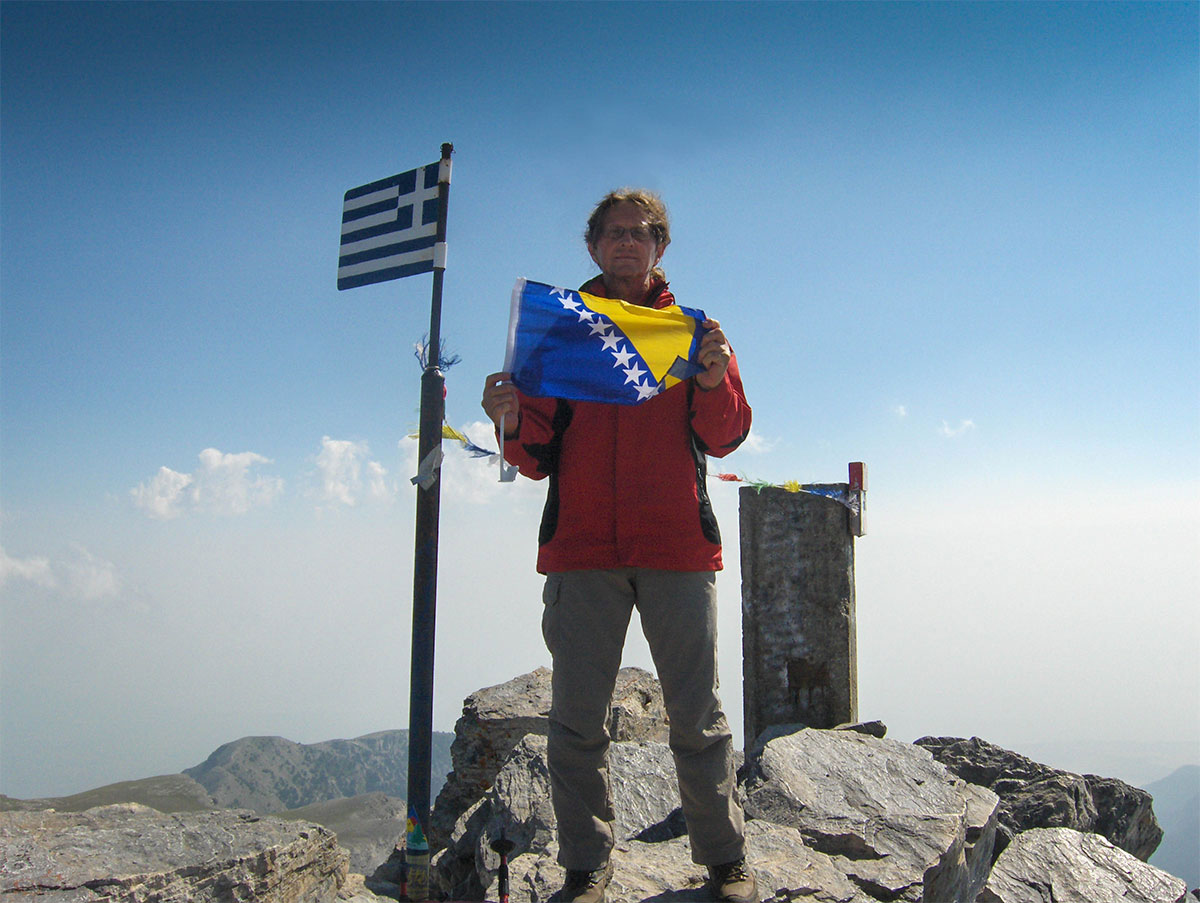
At the top, Sherpa Angelo Lakpa greeted us with a smile. After six hours of climbing, we unfurled the flag of Bosnia and Herzegovina, which fluttered for the first time on the summit of Mera Peak. The wind had stopped completely, and it warmed up enough for us to spend nearly thirty minutes taking in the view.

From the highest point, we gazed upon five of the world’s fourteen “eight-thousanders”:

  • Mount Everest (8848 m a.s.l.)
  • Kangchenjunga (8586 m a.s.l.)
  • Lhotse (8516 m a.s.l.)
  • Makalu (8485 m a.s.l.)
  • Cho Oyu (8201 m a.s.l.)

We could also clearly see Gyaching Kang, Pumo Ri, Ama Dablam, Baruntse, and Chamlang. We had suspected that travel agencies might be exaggerating when they praised the view from Mera Peak, but they were right. It is an experience that must be lived to be understood.

The Long Way Down

We descended carefully, knowing that most accidents happen on the return when fatigue sets in and concentration slips. We reached High Camp with Angelo, Nima, and Miloš, where our thoughtful Sherpas greeted us with hot tea.

We finally arrived back in Khare at 17:00 PM, exhausted after 14 hours on the move. That evening, the lodge was alive with celebration as we toasted our success alongside climbers from Russia, France, the Czech Republic, Belgium, and Iran.   

October 27, 2009: Khare – Tangnag – Taure – Mosom Kharka

The weather continues to be on our side—every day has been bright and sunny. Today, however, we faced a grueling, long-distance trek back to Mosom Kharka. The pace was significantly faster now that we were descending.

Along the way, we crossed paths with a group of cheerful Scots heading toward Mera Peak. They were eager for details about the ascent and mentioned they were attempting the summit independently, without the assistance of Sherpas. We wished them the best of luck and continued our journey down the Hinkhu Valley. After seven hours of navigating rocky terrain and trekking through the wide riverbed, we finally reached Mosom Kharka.

October 28, 2009: Mosom Kharka – Tashing Ongma – Tashing Dingma – Taktor – Thuli Kharka

From Mosom Kharka, we continued our trek toward Thuli Kharka. We began along the edge of the riverbed before hitting the “EKG” trail—which we remembered vividly from our way up—pushing “up and down” until we reached Tashing Ongma. From there, the trail led uphill through the lush, jungle-like forest to Tashing Dingma. We stopped there for lunch and a well-deserved rest, knowing a constant, taxing ascent still lay ahead of us.

We finally reached Thuli Kharka after 8 hours on the trail, including our lunch break and several shorter rests. We spent the evening in a nearby lodge, enjoying the company of the Iranian climbing team.

October 29, 2009: Thuli Kharka – Zatrwa La – Zatrwa Og – Lukla

Today is the “big push”—we have to cross two high passes and descend all the way back to Lukla. We set out from Thuli Kharka alongside numerous trekkers and expedition members who had also been on Mera Peak. We’ve come to know many of them over the past few days; we stop for photos, exchange emails, and swap phone numbers. Some express a genuine interest in visiting our mountains back home. While I deeply respect the world’s great ranges for their staggering, raw beauty and the challenge of their high peaks, I still believe our mountains are unique—crafted to a human scale, meant for true enjoyment.

For the second time in just ten days, we crossed the Zatrwa La (4613 m a.s.l.) and Zatrwa Og (4538 m a.s.l.) passes. As soon as we cleared the last one, a sense of relief washed over the group; from here on, it’s all downhill to Lukla.

Familiar Faces in Chutanga

By late afternoon, we reached Chutanga. Nothing much had changed during our absence. The elderly man was still there by the stream, skillfully slicing bamboo into strips for porter baskets. The children were playing just as they were on our first day, and the adults were busy with their “hospitality,” offering drinks to passing foreigners. We took a long break for lunch on the dirt terrace above the lodges.

As we continued toward Lukla, we collected small stones of interesting shapes—simple keepsakes to remember our time in the world’s greatest mountain range. We finally reached Lukla after 9 hours of hiking, including our rests and lunch.

A Promise Kept

After resting and having dinner at the “Paradise Lodge,” we kept the promise we made at the start of the journey. We ordered a round of “Everest” beers and toasted our successful ascent of Mera Peak.

October 30, 2009: Lukla

In the morning, following breakfast, we pooled our money to prepare tips for our hardworking porters. In the lodge garden, our Sirdar, Nima, distributed the funds to each porter as they signed the list. It was a moving scene; these men, with their weathered faces, could not hide their emotions and thanked us from the heart for our modest gift. Over the last 14 days, they gave their absolute all to ensure our heavy gear arrived at each camp on time. We are fully aware that without the help of Nima’s team, this journey would have been far more difficult. Meeting and spending time with these wonderful people—who live so simply and find joy in the small things we often overlook in our world—will remain a lasting and cherished memory. Before parting, we took a final group photograph, now standing together as old acquaintances and friends.

Souvenirs and “Chhang”

We spent the afternoon shopping for souvenirs and handicrafts unique to the Solo Khumbu region. After dinner at the lodge, we sat with Nima, Angelo, and the rest of the Sherpa crew, drinking chhang—a traditional local beer. In appearance and texture, it’s similar to boza, but with a notable difference: it definitely has an alcoholic kick. They warn us that if you overdo it, it can take two or three days to fully sober up from its effects!

October 31, 2009: Lukla – Kathmandu

We spent nearly half the day (07:30 AM – 12:30 PM) in the terminal building of the “Tenzing-Hillary” Airport in Lukla, waiting for our flight back to Kathmandu. It was clear there were issues—whether technical or due to the fog, we never found out—but we could see the flight crew was in a massive hurry. While standing on the tarmac next to the plane, they were loudly and hungrily slurping soup delivered to them from the terminal. We were hurried onto the plane and took off immediately. This time, the flight attendant didn't even have a moment to hand out earplugs or candy.

Through the small cabin windows, we took one last look at the Himalayan peaks. Who knows if we will ever return here? But one thing is certain: the Himalayas opened their doors wide and took us into their embrace. Whether we close those doors permanently behind us is entirely up to us.

Back to Civilization

After a smooth 45-minute flight, we landed in Kathmandu. Returning to Hotel Vajra, we immediately surrendered ourselves to the simple luxuries of civilization: a long bath, a shave, a haircut, a massive lunch, and finally—sleeping in a real, honest-to-goodness bed. It’s funny how civilization works; just as we had begun to forget its comforts, it crawled back under our skin in a single afternoon.

November 1, 2009: Kathmandu

We began our morning with a bit of exploration in Thamel, the historic heart of Kathmandu. Since we set out early, the streets were blissfully quiet, free from the usual chaotic crowds. Shopkeepers were just starting to roll up their shutters and open for the day.

Our first stops were the specialized mountaineering shops to browse the latest gear. Afterward, we spent the rest of the morning hunting for gifts and unique souvenirs to bring back home.


At noon, we headed to the eastern part of the city to visit the Pashupatinath Temple (often referred to as the Temple of the Dead). This is the largest Hindu temple in the world dedicated to the god Shiva, situated on the banks of the Bagmati River. The temple has been a UNESCO World Heritage site since 1979.

On the right bank of the river, directly in front of the temple, the cremation of the deceased takes place. Visitors who are not Hindu are permitted to observe this sacred funerary rite only from the left bank of the river. We were deeply shaken by the sight; for those of us coming from Europe, such an open and direct encounter with death is highly unusual and profound.

According to the latest census, Nepal has a population of 27 million. Of these, 80% are Hindu, 15% are Buddhist, and the remaining 5% consist of Muslim and Christian communities.


In the afternoon, we headed out to visit the Boudhanath Stupa (Buddhist Temple). This is the largest Buddhist temple in the world dedicated to Siddhartha Gautama, the founder of Buddhism. Located about 11 km from the city center, it is one of Nepal’s most popular tourist destinations and has been on the UNESCO World Heritage list since 1979.

The area around the temple was bustling with pilgrims and tourists. The surrounding square is lined with souvenir shops, art galleries, tea houses, and restaurants. In one of the galleries we visited, we watched young artists working with incredible patience and precision, creating wondrous paintings inspired by religious and mystical motifs from the life of Buddha. On these vibrantly colored paintings, some of the finer details are often meticulously crafted using liquid 24-karat gold.


At the end of the day, we visited Durbar Square, a place surrounded by spectacular architecture featuring vivid motifs from the turbulent past of Nepal and Kathmandu, all intricately carved in wood. This is the heart of the old city, as it was once the site of the royal palace. The area consists of several squares connected by a maze of streets and alleys.

The squares are swarmed by street vendors offering tourists everything from flower garlands to hallucinogenic opiates. Perhaps because of my long hair, street dealers approached me frequently, offering hashish and marijuana. Appearances can be deceiving, but it was difficult to convince the dealers otherwise—they kept walking behind me, persistently praising the quality of their “goods.”

November 2, 2009: Kathmandu

Early in the morning, Redžep, Sanja, and I set out to visit yet another famous sanctuary in Kathmandu. Despite it being Sunday, the streets are incredibly crowded; we soon learn that in Nepal, Saturday is the non-working day. Swayambhunath Temple, better known as the Monkey Temple, is a religious complex where monkeys live freely in one section. The temple is perched on a hill, offering a panoramic view of the entire Kathmandu Valley.

To reach the Buddha stupa at the top—where a Tibetan monastery, museum, and library are located—one must climb 365 steps. Even here, one is not safe from the persistence of street vendors. A saleswoman, whom we had casually asked about the price of a kukri knife and a small bell, chased us all the way up the stairs. Breathless and drenched in sweat, she offered us a 50% discount—just five minutes after she had refused to even hear of a lower price!

I was particularly amused by a bird seller with cages hanging from a long pole over his shoulder. He insisted I buy a bird; to get him to back off, I told him I couldn't take it on the plane. He quickly replied: “No problem, give it as a gift to one of the children here,” pointing to a group of smiling, curious boys who had surrounded us.

After touring the temple, we took a taxi back to the city. It is always best to negotiate the fare with taxi drivers beforehand, as they rarely use meters. A good rule of thumb: whatever price the driver offers, feel free to cut it in half—you'll find the driver will still be more than satisfied.

November 3, 2009: Kathmandu – Delhi

We used the morning for one last trip into the city to pick up the final gifts and souvenirs we had missed over the past two days. We decided to return to the hotel by rickshaw. The cost of transport is incredibly cheap; the driver was overjoyed when we paid him 300.00 NPR (roughly 3.00 EUR) for the ride. It’s nearly 3 km from Thamel to the hotel, and there were three of us squeezed into the rickshaw.

Around noon, Dragan Jaćimović and Nina Ađanin arrived at the hotel with their team, returning from a successful expedition to Island Peak (6189 m a.s.l.). Everyone was in high spirits—their climb had been a great success, with only one member unable to reach the summit due to health reasons. Over coffee, we shared stories and impressions from our respective climbs before saying our final goodbyes.

Farewell to the Kingdom

At the airport, we were met with the usual chaos of the terminal building: the repetitive process of weighing transport bags, checking in, security controls, and luggage searches. At 15:45 PM, our flight departed for Delhi.

We leave the Kingdom of Nepal deeply satisfied. In such a short time, we caught a glimpse of its rich cultural heritage, turbulent history, local customs, and religious rites—and, most importantly, the Himalayas, the very reason we embarked on this long journey. We return home spiritually enriched and strengthened, hoping that these experiences will serve us well in the life that lies ahead.

November 4, 2009: Delhi – London – Belgrade – Sarajevo

We slept through most of the long flight from Delhi to London. By exactly noon, we touched down at the Surčin Airport in Belgrade. Outside, the fields were covered in the first snowfall of the season. We soon learned that the airport had been completely closed to traffic only yesterday due to a severe snowstorm.

We finally arrived home in Sarajevo at 21:00 PM, after 24 days away.


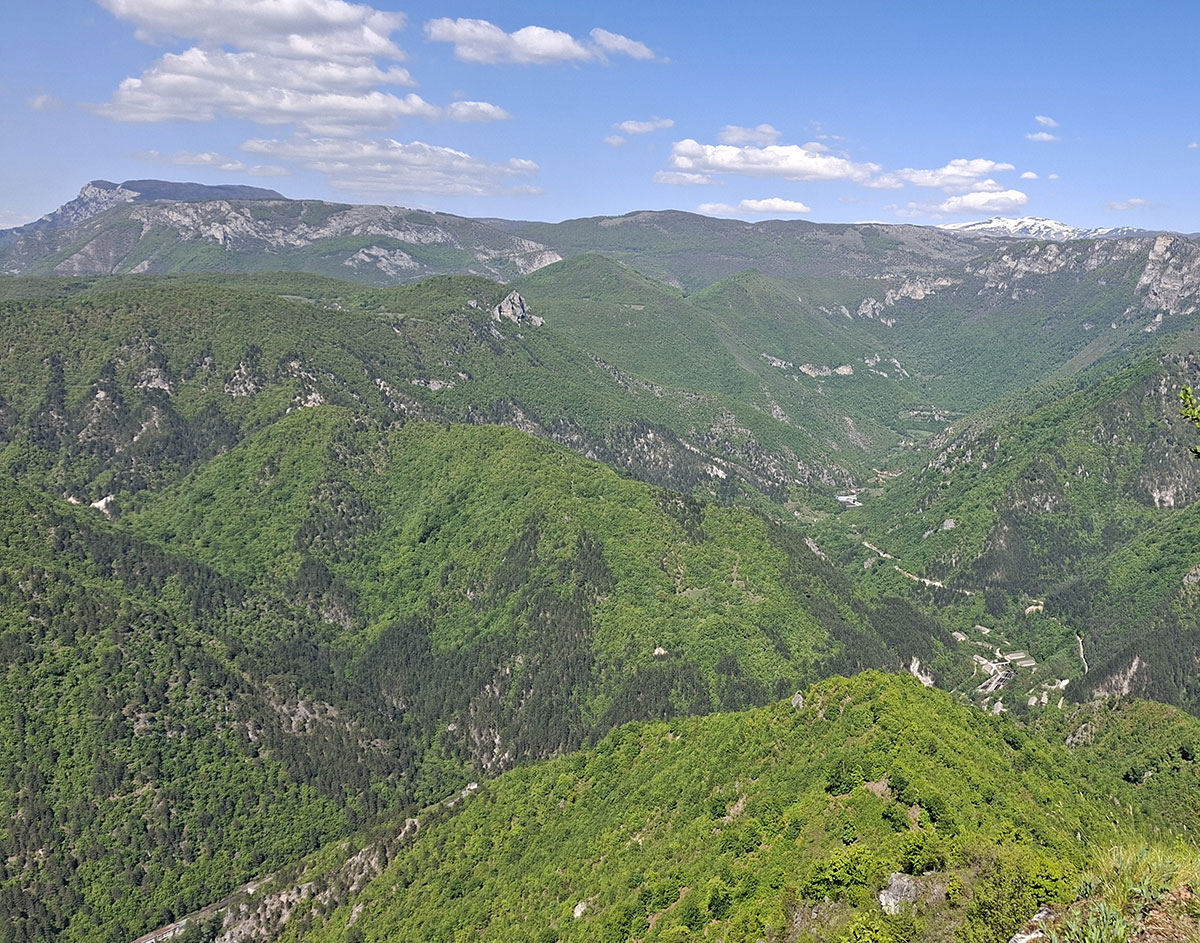
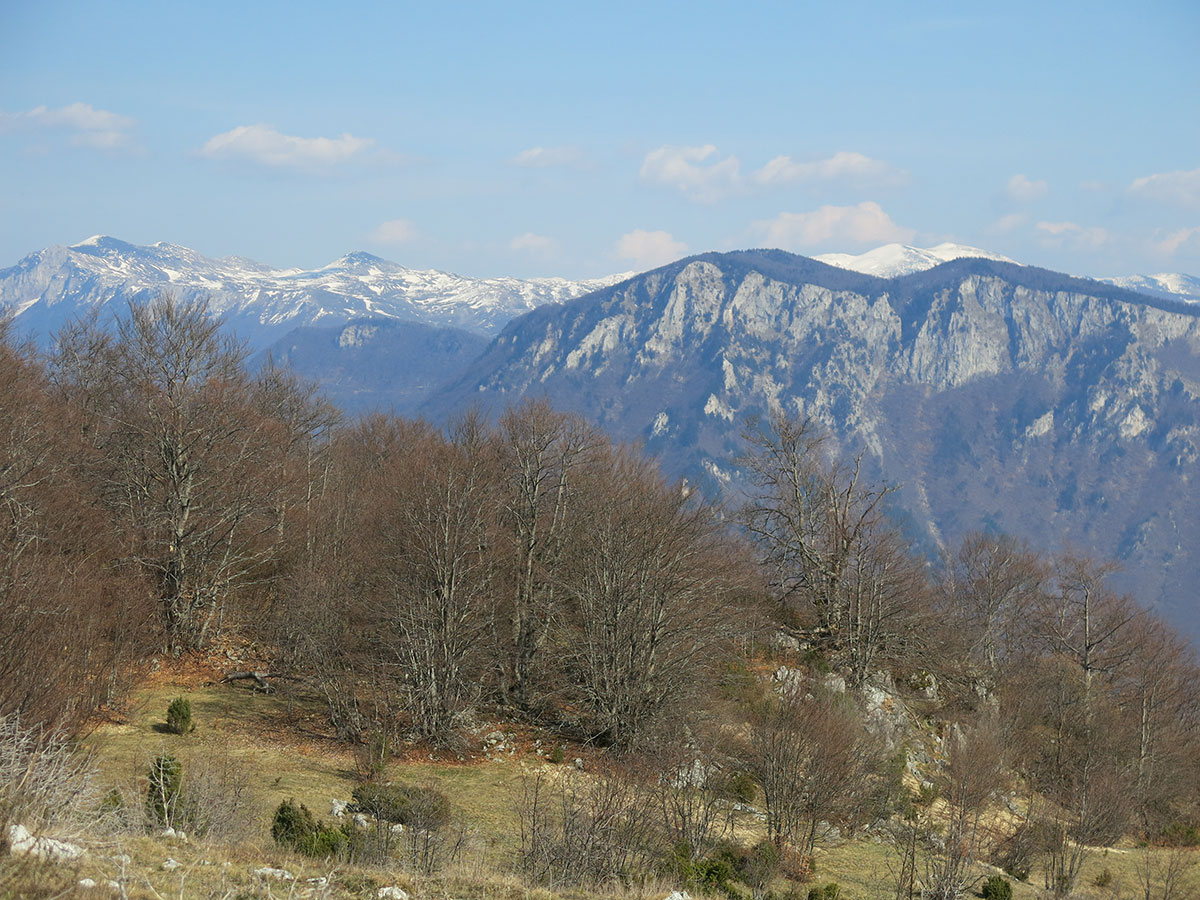
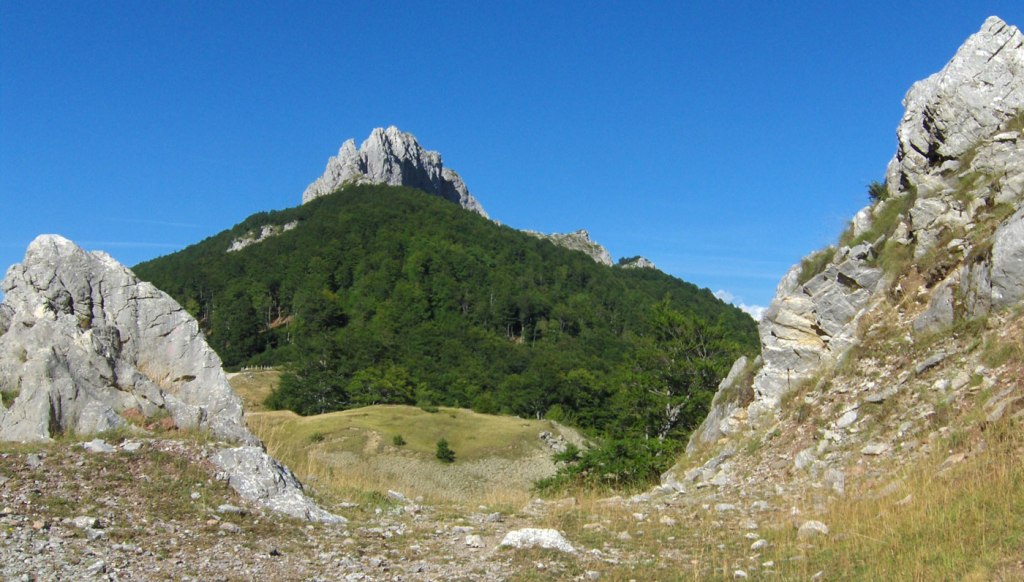
Cover Photo: Himalayas, a break at Kharka Teng (4,020 m a.s.l.)


Nepal stays in your heart long after you descend. Have you ever visited the Himalayas, or is a trek to Kathmandu on your bucket list? Share your favorite mountain memory or ask a question in the comments below.

Mountain Lakes of Bosnia and Herzegovina

Welcome to my mountain world. For over half a century, I have walked the ridges and canyons of the Dinaric Alps, documenting the ‘Mountain Eyes'—the fragile glacial lakes that represent the soul of Bosnia and Herzegovina. This article is the result of fifty years of professional guiding and research. It is more than just a list. It is my personal record of a vanishing wilderness.

I invite you to study these waters, respect their history, and understand the threats they face. The mountains are not in a hurry, and I hope you will take your time to read their story.

Author of text and photography: Braco Babić

🗺️ Coverage: Over 40 lakes across Zelengora, Treskavica, Prenj, and more.

⚠️ Safety: Critical warnings for hikers on Mt. Treskavica.

🧬 Endemics: Where to find the prehistoric Alpine Triton.

🏔️ The Highest Point: A guide to Crvenak Lake (1970 m a.s.l.).


Jump to a Mountain Range: Zelengora | Čvrsnica | Prenj | Šator Mountain | Crvanj | Lebršnik | Treskavica | Bjelašnica | Raduša | Visočica | Vranica

Almost all mountain lakes in Bosnia and Herzegovina are younger hydrographic formations. Through the processes of washing away and the deposition of rock decay products, the lake basins are being intensely filled. If the necessary restoration and protective works are not carried out within the lake watersheds—under mandatory scientific and professional supervision—the mountain lakes of Bosnia and Herzegovina will disappear relatively quickly.

Beyond natural negative processes, their disappearance is continuously accelerated by other negative influences: the pollution of lake water and the surrounding environment, artificial interventions, the devastation of lake watersheds, fish stocking, the construction of weekend dwellings and even entire holiday settlements, auto-camps, and similar developments (as seen, for example, with Prokoško and Boračko lakes).

Some lakes, although they bear such a name, actually correspond more to ponds, puddles, or marshes than to a lake, considering their hydrographic and morphographic character. This writing provides a brief overview of mountain lakes regardless of their origin, size, or character. Given their negligible surface area and volume, the mountain lakes of Bosnia and Herzegovina have no economic significance. Some of them serve tourist functions, while the majority serve as watering holes for the livestock of nomadic herders.

In existing geographical and other literature, the opinions accepted until recently were that almost all mountain lakes were formed in morphological depressions and date back to the Pleistocene period, when some of our Dinaric mountains were affected by glaciation. Because of this, even today, all mountain lakes and some other natural lakes in Bosnia and Herzegovina are—often without supporting evidence—referred to as “glacier or glacial lakes.” You can learn more about this and many other interesting facts in the book NATURAL LAKES OF BOSNIA AND HERZEGOVINA, a limnological monograph, by Prof. Dr. Muriz I. Spahić (HARFO-GRAF, Tuzla, 2001).


LAKES ON ZELENGORA

The largest number of mountain lakes can be found on Mount Zelengora, as well as on Treskavica. There are a total of 10 lakes on Zelengora, 8 of which are of glacial origin. They are fed by glaciers, sub-lacustrine (under-lake) springs, surrounding springs, and streams. All lakes are accessible via hiking trails—some of which are officially marked—while others can be reached relatively closely by car. Except for Bijelo Jezero and Gornje Bare, fish can be found in all the other lakes. The first fish stocking was carried out by the Fisheries Institute of Bosnia and Herzegovina in 1963. Five lakes are located within the “Sutjeska” National Park: Crno, Bijelo, Donje Bare, Gornje Bare, and Orlovačko. Located outside the park boundaries are: Kladopoljsko, Štirinsko, Kotlaničko, Borilovaćko, and the lake under Pliješ peak.

Kladopoljsko jezero / Kladopoljsko Lake (1350 m a.s.l.): Is located on the western slopes of Mount Zelengora. The lake lies in a canyon near Kladovo Polje, squeezed between the steep cliffs of Muravske Strane and Planinica. It is overgrown on all sides with lush sedge and other marsh plants, notably the yellow water lily. Wooden logs (klade) lie at the bottom of the lake. There is no forest vegetation anywhere around the lake or in the field, which suggests that in the past, there were large forest complexes here or that a road for transporting logs passed by the lake. The lake and the field were named after these logs. The lake is 250 m long, 100 m wide, and up to 9 m deep. The only fish species in the lake is brown trout. The lake can be reached closely by off-road vehicle from the direction of Kalinovik via the villages of Oblje, Suho Polje, and Kladovo Polje. From Oblje, the lake can be accessed by a marked hiking trail (2 hours walk).

Štirinsko jezero / Štirinsko Lake (1672 m a.s.l.): Is located on the northern side of the Mali Zimomor peak. The lake lies on the vast Štirine plateau, after which it was named. Around the lake are extraordinary mountain landscapes: meadows covered with green grass, interspersed with diverse mountain flowers and white limestone surfaces. Of all the lakes on Zelengora, it is located at the highest altitude and has the largest surface area. The lake is 600 m long, 300 m wide, and up to 4.5 m deep. The Arctic char inhabits it. Along with Kotlaničko and Bijelo, it is one of the three Zelengora lakes that cannot be closely approached by car. The lake can be accessed by a marked hiking trail from two directions: from the hunting lodge on Borilovac and from the pass on Borovno Brdo (2 hours walk).

Kotlaničko jezero / Kotlaničko Lake (1528 m a.s.l.): Lies in a karst depression squeezed by the bare rocky peaks of Prutača, Kotura, Dumoš, and Veliki Zimomor. The triton, an endemic amphibian, lives in the lake. It is the deepest on Zelengora, 480 m long, 200 m wide, and up to 10 m deep. The lake is rich in fish (Arctic char). The lake can be approached from the pass on Borovno Brdo via a marked hiking trail (2 hours walk).

Orlovačko jezero / Eagle Lake (1438 m a.s.l.): Is one of the most beautiful mountain lakes in Bosnia and Herzegovina. It is located in the central part of Zelengora and is surrounded by the peaks: Orlovac, Ljeljen, and Stog. It is closed off by high ridges, partially surrounded by beech forest and lush pastures. It is kidney-shaped, 380 m long, 100 m wide, and up to 5 m deep. The bottom of the lake is overgrown with sedge and green grass, which is why the water looks blue-green. The shores are sandy and easily accessible. Around the lake are pastures full of flowers, and above are gray limestone peaks interspersed with green dwarf pine and snowfields. The lake can be reached by off-road vehicle from two directions: from Kalinovik via Konjska Voda and from Čemerno via the pass on Borovno Brdo.

Crno jezero / Black Lake (1440 m a.s.l.): Lies in a deep forest on the northeastern side of the Orlovac peak. It is oval-shaped, 170 m long, 80 m wide, and up to 3 m deep. The bottom of the lake is covered with grass, and the surroundings with high coniferous forest; as a result, the water looks black, giving the lake its name. Due to the environment in which it is located, it is among our most beautiful mountain lakes. The lake can be reached closely by off-road vehicle from the direction of Tjentište via Štavanj and Vrbnica to Srijemušna Luka. Further to the lake is a 30-minute walk.

Bijelo jezero / White Lake (1416 m a.s.l.): Lies on the northern side of the Orlovača peak. Fine white sand is found at the bottom of the lake, after which it was named. It is also known as Zeleno (Green) Lake due to its color. It is the smallest in surface area, irregularly shaped, 90 m long, 70 m wide, and up to 2.5 m deep. It is indented in relief that could allow for larger accumulation, which would significantly increase the lake's surface. It is about a 30-minute walk from Crno Lake.

Jezero Gornje Bare / Lake Gornje Bare (1510 m a.s.l.): Lies on the northern side of the Tovarnica slopes, at the foot of the Dobra pass and Uglješin Peak. it is elliptical, 150 m long, 80 m wide, and up to 2 m deep. The bottom is muddy, sprinkled with sand, and overgrown with fine grass. Around the lake, the terrain is covered with high mountain grass interspersed with blueberry bushes. The lake can be reached closely by off-road vehicle from the direction of Tjentište via Krekovi and Careva Gora. Further to the lake is a 30-minute walk.

Jezero Donje Bare / Lake Donje Bare (1470 m a.s.l.): Lies on the eastern side of the Ardov peak. It is elliptical, 250 m long, 120 m wide, and up to 4.5 m deep. Beautiful meadows and forests around the lake create an Alpine atmosphere. A hunting lodge is located in the immediate vicinity. The lake can be reached by off-road vehicle from the direction of Tjentište via Krekovi and Careva Gora.

Borilovaćko jezero / Borilovaćko Lake (1480 m a.s.l.): Lies in the Borilovići area between two peaks: Kalelija and Stog. It is also called Jugovo Lake after the former gamekeeper of the Sutjeska National Park, Jusuf Jugo, who was its conceptual creator and builder. The lake was created by artificial damming (closing a sinkhole) to prevent water from flowing away. This marvelous work of human hands began construction in the middle of the last century. Over time, the lake has taken on the characteristics of a natural lake. It is circular, 250 m long, 100 m wide, and up to 4 m deep. It is surrounded by marsh moss and pond plants. Around the lake are vast pastures with succulent mountain grass. The lake can be reached by off-road vehicle from Kalinovik via Konjska Voda or from Čemerno via the Borovno Brdo pass.

Jezero pod vrhom Pliješ / Lake under the Pliješ peak (1140 m a.s.l.): Lies in a hollow near the crossroads for Palež and Pašina Poljana. It is fed by surrounding springs, melting snow, and rainwater. It is elliptical, 250 m long, 50 m wide, and up to 2 m deep. It is overgrown on all sides with marsh vegetation. The Oteša stream flows out of the lake and joins the Bistrica river near Miljevina. The lake can be reached by off-road vehicle from Miljevina via the village of Rataja.


LAKES ON ČVRSNICA

Jezero Crvenak / Lake Crvenak (1970 m a.s.l.): Is at the highest altitude and is the smallest glacial lake in Bosnia and Herzegovina by surface area. It is also known as Crljenak. It is located on the western side of the Trinača peak on the edge of the craggy Strmenica, near the famous Hajdučka Vrata (10 minutes walk). It is oval, 70 m long, 50 m wide, and up to 9 m deep. Around the lake, the terrain is covered with difficult-to-pass dwarf pine. The triton, an endemic amphibian, lives in the lake. It is one of our few mountain lakes whose water is drinkable. The most favorable access to the lake leads from the “Vilinac” mountain hut via a marked hiking trail (1 hour walk).  

Blidinjsko jezero / Blidinjsko Lake (1183 m a.s.l.): Lies in Ivan Dolac at the very end of Dugo Polje, squeezed by the steep slopes of the Jelinka peak on Čvrsnica and Borova Glavica on Vran Mountain. The lake was created by artificial damming (closing sinkholes). Over time, it took on the characteristics of a natural lake. It is 2.5 km long, 1.5 km wide, and up to 2 m deep. By surface area, it is the largest mountain lake in Bosnia and Herzegovina. It is fed by melting snow and rainwater. In summer, a large part of the water disappears into sinkholes, causing the lake level to drop significantly. Numerous fish species are found in the lake: chub, Dalmatian barbel-gudgeon (oštrulja), podbila, and rainbow trout. Around the lake, the terrain is suitable for livestock grazing. The lake is protected under the “Blidinje” Nature Park. The best access by car is from Jablanica via Sovići Vrata.

Orlovo jezero / Eagle Lake (1800 m a.s.l.): Is located east of the ski center at Blidinje (about 2.5 km air distance). The lake lies in the area of Donji Mejdani in a hollow south of Orlov Kuk peak, after which it was named. It is of glacial origin. It is fed by glaciers and a nearby spring. The terrain around the lake is overgrown with dense dwarf pine. The lake is modest in size. Access is via a hiking trail from the funerary chapel at Risovac (3 hours walk).   

Ledeno jezero / Ice Lake (1750 m a.s.l.): Is located in the Velika Čvrsnica massif. The lake lies in an amphitheater under the impressive Pesti Brdo / Ploča peak. It is of glacial origin. The environment in which the lake is located represents a real small oasis. It is fed by glaciers and a nearby spring. The lake is of modest dimensions. Access is from the “Vilinac” mountain hut (3 hours walk).   

Lebršnik – Jagodino jezero / Jagodino Lake (1507 m a.s.l.)

LAKES ON PRENJ

Boračko jezero / Boračko Lake (404 m a.s.l.): Is located on the northeastern side of Prenj between Crna Gora and Tranjina. It represents one of the largest natural lakes in Bosnia and Herzegovina. It is situated in a large hollow at the extreme southeastern part of Boračka Draga, near the regional road Konjic – Glavatičevo. The lake is surrounded by coniferous and deciduous forests. It is of glacial origin, elliptical in shape, 780 m long, 400 m wide, and up to 14 m deep. The shore is overgrown with reeds, water lilies, and other marsh plants where wild ducks, coots, and grebes nest. It receives water from the Borački stream and the stream of Boračka Draga, as well as several strong springs. The Šištica river flows out of the lake, about 3 km long, and flows into the Neretva (left tributary). At the mouth, the water sinks and breaks through the rocks with a loud sound resembling hissing (“šištanje”), ending in the Neretva with a 30 m high waterfall. It is a paradise for fishermen (carp, brown, lake, and rainbow trout, and river crayfish). Due to heavy construction and negative human impact, it is one of our most endangered mountain lakes. It can be reached by car from Konjic (21 km). It was placed under state protection in 1954 and is on the IBA (Important Bird Areas) list. 

Jezerce / Lake (1655 m a.s.l.): Is located in the central part of Prenj. The lake lies in a hollow on the southern side of the striking Taraš peak. It is of glacial origin, fed by glaciers and a nearby spring. In summer, a herd of horses often stays around the lake, a pastoral image worth seeing. A beautiful atmosphere is created when the Osobac peak is reflected on the surface. It is of modest dimensions. Nearby is the mountain hut of the same name (10 minutes walk). Access is from the Konjička Bijela valley via Skok (3 hours walk).


LAKE ON ŠATOR MOUNTAIN

Šatorsko jezero / Šatorsko Lake (1488 m a.s.l.): Is located in the central part of Šator Mountain. The lake lies in a vast hollow on the northern side of Veliki Šator, the highest peak of the mountain. It is of glacial origin, elliptical, 280 m long, 150 m wide, and up to 8 m deep. It is fed by glaciers and sub-lake springs. It is a sanctuary for the Alpine Triton, an endemic amphibian. The Mlinski stream flows out of the lake and, together with the Šatorski stream, forms the Unac river. Nearby is Bulino Vrelo, which according to folk legend heals all diseases. Traditionally, people gather at the lake on St. Elijah’s Day (August 2). Accessible by off-road vehicle from Bosansko Grahovo via Tičevo or from Livno via Gornji Peulji.


LAKE ON CRVANJ

Crvanjsko jezero / Crvanjsko Lake (1050 m a.s.l.): Is located on the eastern slopes of Mount Crvanj. It is also known as Bačko. It is surrounded by Mali Vrh hill and a belt of beech forest. It is of glacial origin, kidney-shaped, 500 m long, 270 m wide, and up to 13 m deep. It is fed by glaciers, sub-lake, and surrounding springs. The Jezerac stream flows out and joins the Gvozdnica stream to flow into the Neretva. The lake is stocked with carp and lake trout. Regressive erosion of the Jezerac stream is causing the lake to lose more water, and the lake has long since entered its final evolutionary phase. Nearby is the village of Jezero, accessible by off-road vehicle from Ulog (12 km). 


LAKES ON LEBRŠNIK

Jezero pod vrhom Kuk / Lake under the Kuk peak (1501 m a.s.l.): Lies in a hollow surrounded by the rocky cliffs of Kuk, Lupoglav, Krvavica, and Košara. It is of glacial origin and belongs to the source headwaters of the Sutjeska river. It is 50 m long, 25 m wide, and up to 2 m deep. It is seasonal and dries up in summer. Nearby is a mountain hut in Papin Do, accessible by off-road vehicle from the Čemerno pass (8 km). Further to the lake is a 30-minute walk.

Jagodino jezero / Jagodino Lake (1507 m a.s.l.): Lies in a wide hollow surrounded by Jagodina Glavica and the Košara peak. It is of glacial origin, 60 m long, 40 m wide, and 2 m deep. It is seasonal and has dried up during the summer in recent years. Access is the same as for the lake under Kuk.

Jezero pod Ravnom Gredom / Lake under Ravna Greda (1400 m a.s.l.): Is also known as Jezerina. It is of glacial origin, 100 m long, 30 m wide, and up to 2 m deep. It is seasonal. Access is from Čemerno to the mountain hut (Inića Grob), then a 40-minute walk.

Jezero u Čemernom / Lake at Čemerno (1288 m a.s.l.): Lies in a hollow to the right of the road towards the source of the Sutjeska. It is of modest dimensions, seasonal, and fed by melting snow and rain. Accessible by off-road vehicle (1 km from the pass).

Škipina lokva / Škipina Puddle (1647 m a.s.l.): Lies on a wide plateau near Provaljeni Do. It is seasonal and modest in size. Accessible from Papin Do (2 hours walk).


LAKES ON TRESKAVICA

Treskavica is home to a vast number of lakes, renowned for the exceptional beauty of the landscapes in which they are nestled. They are fed by glaciers, sub-lake springs, surrounding springs, and mountain streams. The Veliko, Platno, Crno, and Bijelo lakes are of glacial origin and have been officially declared protected monuments of nature.

Note: During the past war (1992–1995), heavy battles were fought on Treskavica, leaving behind unexploded ordnance and anti-personnel mines. For this reason, it is strictly recommended that you do not move off the marked hiking trails. The areas around the lakes at Spasovača, Gornja Bara, and Simovića Bara are particularly high-risk.

Veliko jezero / Great Lake (1550 m a.s.l.): Located in the central part of Treskavica, this lake lies in a vast hollow between the Ljeljen peak to the west and the Nikoline Stijene cliffs to the east. It is glacial in origin, fed by glaciers and surrounding springs. It also receives water from Platno Lake via a stream. Due to the constant infilling by scree and alluvial deposits, the lake's dimensions are slowly shrinking. It is 290 m long, 150 m wide, and up to 5 m deep. The water flows out on the eastern side and sinks beneath the moraine barrier at Šišan, continuing as the Glibovac stream until it reaches the Skakavac waterfall, after which it changes its name to Hrasnica. Its eastern shores are thick with marsh vegetation, and the lake is stocked with rainbow trout. Access: Marked hiking trail from the village of Turovi (2.5 hours walk).

Platno jezero / Cloth Lake (1580 m a.s.l.): Located only about 150 m southeast of Veliko jezero, locals also call it Blatno Jezero (Muddy Lake). It sits at the bottom of the Krajačić canyon, squeezed between Nikoline Stijene and the Buca Glava peak. It is fed by the glaciers of Nikolino Ždrijelo and underground springs. The lake is 80 m long, 30 m wide, and up to 2 m deep. Its bottom is covered with silt and white mud. Access: Marked hiking trail from Turovi (3 hours walk).

Crno jezero / Black Lake (1675 m a.s.l.): Northwest of the Great Lake, Crno Jezero lies in a hollow between Ljeljen and Ilijaš. In summer, its shores are a favorite spot for swimming and camping. The lake is 170 m long, 100 m wide, and up to 4 m deep. Is home to the Triton, an endemic amphibian. Access: Marked hiking trail from Turovi (3.5 hours walk).

Bijelo jezero / White Lake (1697 m a.s.l.): Located northeast of Treskavica’s highest peak, Ćaba, this lake sits at the foot of the Ćabenske Stijene cliffs. It is under constant threat of disappearing as scree from the cliffs above intensely fills its basin. It is 140 m long, 80 m wide, and up to 1 m deep. Snow and ice linger here for much of the year, which is how it earned its name “White Lake”. Access: Marked hiking trail from Turovi (4 hours walk).

Zmijsko jezero / Snake Lake (1633 m a.s.l.): Found east of the Oblik peak, this lake lies in a hollow beneath the rocky ridge connecting the summits of Oblik and Zubovi. Above the lake runs a craggy footpath leading from Turovo Stan to Ovčije Ždrijelo. It holds water year-round. Access: Marked hiking trail from Turovi (3 hours walk).

Jezero na Turovom Stanu / Lake on Turov Stan (1640 m a.s.l.): This lake is hidden, surrounded on all sides by dense beech forest near a former hunting lodge. Fed by melting snow and rain, it holds water all year and is known as a vital watering hole for wild beasts and other mountain game. Access: Marked hiking trail from Turovi (3 hours walk).

Trokunsko jezero / Trokunsko Lake (1220 m a.s.l.): Also known as Suho Jezero (Dry Lake), it lies in a deep hollow under the rugged cliffs of Mali Čardak. It is a stark example of negative geographica l processes; the lake is almost entirely buried by rock fragments and trees brought down by avalanches, causing it to dry up and nearly vanish. Access: Footpath from the village of Dujmovići (1 hour walk).

Jezero na Spasovači / Lake on Spasovača (1590 m a.s.l.): Located in a shallow hollow beneath the Vjetrene Stijene (Windy Cliffs) and surrounded by beech forest and mountain pastures. It is seasonal and dries up in the summer.
Warning: The terrain immediately surrounding the lake is a high-risk area for landmines from the past war.

Jezero na Gornjoj Bari / Lake on Gornja Bara (1600 m a.s.l.): This lake lies in a large hollow where a great katun (shepherd's settlement) once stood. In its immediate vicinity is a medieval necropolis with Stećci (tombstones). It is seasonal and modest in size.
Warning: The terrain immediately surrounding the lake is a high-risk area for landmines from the past war.

Jezero Simovića Bara / Lake Simovića Bara (1395 m a.s.l.): Also known as Gospina Lokva (The Lady’s Puddle) or Gvozno jezero, it lies in a deep hollow beneath the rocky cliffs of Veliki Treskač and Mali Treskač. Though created by human hands (by closing a sinkhole), it has long since taken on the character of a natural lake. It is 200 m long, 100 m wide, and up to 4 m deep. Rich in rainbow trout, attracting passionate fishermen.
Warning: The terrain immediately surrounding the lake is a high-risk area for landmines from the past war.

Treskavica – Crno jezero / Black Lake (1675 m a.s.l.)

LAKES ON BJELAŠNICA

Lokvanjsko jezero / Lokvanjsko Lake (1760 m a.s.l.): Located on the northeastern side of Mount Bjelašnica, this lake lies in a hollow on the western side of the Mala Vlahinja Peak. It is of glacial origin and elliptical in shape, measuring 100 m long, 60 m wide, and up to 2 m deep. It is fed by glaciers and a nearby spring. The lake is home to the Alpine Triton, an endemic amphibian. It is currently exposed to heavy infilling by scree (rock fragments) from the eastern side, where a marsh has begun to form. Half of the lake's surface is already covered by marsh vegetation, with a tendency to spread further. If urgent restoration is not carried out, the lake faces total disappearance. Access: Follow the marked hiking trail from the “Mrtvanjski Stanari” mountain hut (1.5 hours walk).

Blatačko jezero / Blatačko Lake (1150 m a.s.l.): Situated on the southwestern part of Bjelašnica, this lake lies in a karst hollow near the village of Blace, after which it was named. It is glacial in origin, oval-shaped, 420 m long, 175 m wide, and up to 2 m deep. It is fed by sub-lake springs. Due to its use as the primary watering hole for livestock, a process of marsh vegetation growth has begun. The lake has taken on a swampy appearance, and only one-third of its surface remains free of vegetation. For a long time now, by scientific definition, it has effectively ceased to be a lake. Access: Accessible by off-road vehicle from Konjic via the villages of Džepi and Vrdolje.

Kalajli jezero / Kalajli Lake (1645 m a.s.l.): Located on the northwestern slopes of Bjelašnica, this lake lies within one of the many sinkholes in the area between the Opančak katun (shepherd settlement) and the Hranisava peak. It is of modest dimensions and glacial origin, fed by glaciers and sub-lake springs. It holds water throughout the entire year. Access: Reachable by off-road vehicle from Tarčin to the Opančak katun, then continue along a shepherd's path to the lake (1 hour walk).

Sitničko jezero / Sitničko Lake (1695 m a.s.l.): Found in the central massif of Bjelašnica, this lake lies in a large valley near the “Sitnik” mountain hut. It is of modest dimensions. The lake was created artificially in the middle of the last century by damming and sealing the bottom to prevent water drainage. it plays an important role as a watering hole for livestock. It is fed by melting snow and rain; it is seasonal and dries up during the summer.

Balića jezero / Balića Lake (1370 m a.s.l.): Located in the central massif of Bjelašnica, this lake lies in a valley near the village of Umoljani, specifically near the hamlet of Elezovići. It is modest in size and fed by two surrounding springs, melting snow, and rainwater. It is seasonal and dries up in the summer, serving primarily as a watering hole for livestock. Access: Accessible via a shepherd's path from Umoljani or Elezovići (30 minutes walk).


LAKES ON RADUŠA

Veliko ili Rumbočko jezero / Great or Rumbočko Lake(1830 m a.s.l.): Located in the central massif of Mount Raduša, on the northeastern side of Idovac, the mountain's highest peak. It is circular, 85 m long, 70 m wide, and up to 1.5 m deep. The lake has no constant tributaries or outflows and is fed solely by melting snow and rain. It is being intensely filled by alluvial deposits from the north and northwest. Today, the lake is almost entirely covered by marsh vegetation and is at high risk of vanishing.
Warning: The terrain immediately surrounding the lake is a high-risk area for landmines from the past war.

Malo ili Voljičko jezero / Small or Voljičko Lake(1730 m a.s.l.): Also located in the central massif on the Plandište plateau. This modest lake is similarly threatened by encroaching vegetation and the risk of drying out completely.  


LAKES ON VISOČICA

On the northeastern slopes of Mount Visočica, there are several small lakes. These lakes are situated in depressions at altitudes ranging from 1300 – 1650 m. They are fed by snowmelt and rainwater. Being seasonal in nature, they tend to dry up during the summer months. Generally, they have the characteristics of large ponds and primarily serve as watering holes for livestock.

Among the most notable are: Veliko Jezero (Great Lake) below the Vito peak, Srednje Jezero (Middle Lake) and Malo Jezero (Small Lake) below the Subar peak, Kolovetnice Lake below the Drstva peak, the lake below Mokre Stijene, and the lake in the Jelenača Valley. These lakes can be reached via marked hiking trails from the Tušila Valley, where the “Vrela” mountain hut is located near the village of Sinanovići.

Kolečića Bara (1650 m a.s.l.): Located in the central massif of Visočica, on a vast plateau so rich in springs and streams that the entire area is simply named Jezera (The Lakes). It is interesting to note that twenty years ago, all the lakes on Visočica held water throughout the entire summer, providing vital resources for the nomadic herders for which Visočica was a famous center. Today, they have become seasonal and dry up in the heat. Access: By off-road vehicle from Sinanovići (Tušila) or the village of Luka (Bjelimići). Both routes lead to the “Police” and “Poljice” plateaus, both of which feature magnificent medieval necropolises with Stećci (tombstones) near the water.               


LAKE ON VRANICA

Prokoško jezero / Prokoško Lake (1636 m a.s.l.): Situated in the central massif of Mount Vranica, this lake lies in a wide basin surrounded by peaks rising over 2000 m. It is one of the largest and most breathtaking mountain lakes in Bosnia and Herzegovina. Glacial in origin and oval-shaped, it is 430 m long, 190 wide, and up to 13 m deep. It is a sanctuary for the Alpine Triton, an endemic amphibian and the rare Bosnian Orchid (Orchis bosniaca).
The lake is a declared Monument of Nature, yet it remains one of our most endangered. The “fever” of construction over the last decade—hundreds of shepherd huts and weekend cottages—along with the devastation of the southwestern slopes has severely damaged the ecosystem. One-third of the lake is already heavily silted and marshy. Furthermore, the construction of a forest road has interfered with the lake's natural outflow, causing regressive erosion that drains the lake's volume.
On the southeastern shore, surrounded by rare spruce forests and dwarf pine, a new mountain hut is being built on the foundations of the old one that burned down in 1983. Access: Off-road vehicle from Fojnica via Jezernica.
Prokoško jezero Prokoško Lake is protected by law as a Monument of Nature of Bosnia and Herzegovina.


Join the conversation

I would like to hear from you. Whether you are an experienced mountaineer, a traveler planning a first visit to our peaks, or someone who simply appreciates the raw beauty of nature—your thoughts are welcome.

Have you stood on the shores of these lakes? Do you have questions about the technical data or the safety of the trails I have described? Please, leave a comment or ask a question below. It is my pleasure to share this knowledge with you.

Mountain Adventures with Braco Babić

Note from the Author: I am happy to share that I am opening a new chapter for this blog. Starting today, I will be publishing a curated selection of my most significant articles in English. Every Wednesday, I invite you to join me as I revisit the trails, history, and hidden corners of the world I have explored. Whether you are a long-time follower or a new visitor from abroad, welcome to my journey.


My name is Braco Babić. I live in Sarajevo, Bosnia and Herzegovina—a land blessed with a profound cultural heritage and immense natural beauty. Centuries of cultural diversity have made my country one of the most fascinating places in Southeastern Europe.

I believe you will be particularly moved by our mountains, which offer the perfect landscape for hiking and trekking. Here, you can immerse yourself in nearly untouched wilderness and stunning vistas at every turn. I always encourage travelers to visit our remote mountain villages to taste our traditional food and experience our local customs. You will find that our highlanders are hearty, hospitable people who will welcome you in the best way possible.

I am a mountain and tour guide with years of experience leading large groups. Above all, I am a passionate lover of nature and I spend as much time as possible among the peaks and lakes. Through this blog, I want to bring you closer to the beauty of the mountains where I have spent the greater part of my life.

As an active mountaineer, I have reached many summits both at home and abroad. Among my most cherished experiences, I would highlight my participation in Himalayan expeditions to Mera Peak and Island Peak. The travelogues and articles I publish here are illustrated with my own photography. I hope you will enjoy reading them and perhaps learn something new about the mountains and the natural world. If you enjoy my blog, please share it with your friends. Let us spread the love for nature and for our planet together.

I live in a land blessed with a profound cultural heritage and immense natural beauty. For me, the mountains have always been more than just scenery; they have been my life’s work and my greatest passion.

I am a mountain guide, tour guide, nature park warden, trail marking instructor, and publicist. I have been an active member of the mountaineering community since 1970 and was one of the key initiators and founders of the Mountain Guide Service in Bosnia and Herzegovina.

Over the decades, I have been honored to serve in several leadership roles, including:

  • President of the Mountain Guide Commission (Mountaineering Association of BiH, 2005–2006).
  • President of the Mountain Guide Commission (Sarajevo Canton, 2007–2008).
  • President of the Commission for Mountain Trails (Mountaineering Association of the Federation of BiH, 2015–2018).

As an active mountaineer, I have stood upon summits across the Balkans, Europe, Africa, and Asia. My most cherished memories include successful Himalayan expeditions to Mera Peak (2009) and Island Peak (2013). Beyond climbing, I have dedicated myself to the “manual labor” of love for our mountains—marking trails and transversals so that others may find their way safely. I have led countless groups to peaks above 2,000 meters in both the blooming summer and the challenging winter months.

When I am not on a trail, I am dedicated to documenting the mountains. I am an author, editor, and consultant for numerous books and projects aimed at promoting the natural beauty of Bosnia and Herzegovina.

For my contributions, I was humbled to receive the “Golden Badge of the Mountaineering Association of BiH” in 2009. More recently, in 2025, I was honored with the “Lifetime Achievement Award – Honorary Member of the Mountaineering Association of the Federation of BiH” the highest recognition for a lifetime of dedication to the mountaineering community.

I am also a lover of photography; when I am in nature, my camera is as essential as my boots. I invite you to explore my travelogues and stories here, and I hope they inspire you to protect and love our planet.

You can also follow my journey and view my latest photos and videos on: Instagram, Facebook, and YouTube

Greetings, and enjoy reading the blog.

Raduša, vrh Idovac

Ibrahimov Dolac

Ibrahimov Dolac je najveće selo na području Zahuma. Smješteno je u podnožju južnih padina planine Raduše na nadmorskoj visini od 1176 m. Na tom području nalazi se veći broj zaseoka: Radići, Beškeri, Šarčevići, Ivići, Petrovići, Ilice, Čeprljače, Sandali, Nikolići, Prskali i Zelići. Sva ova naselja se nalaze u zaleđu Humne glave (1250 m/nv) i po tome je ovo područje dobilo ime – Zahum. Sa Humne glave pruža se odličan pogled na Ramsko jezero.
Na samom ulazu u Ibrahimov Dolac nalazi se spomen kuća i kip posvećen Divi Grabovčevoj. Narodnoj heroini, prelijepoj djevojci rođenoj u ovom selu čiji je život i tragična sudbina ostao samo mit po otporu prema tadašnjoj osmanskoj okupaciji.  
U selu se mogu vidjeti kuće starije više od stotinu godina koje je zub vremena prilično načeo i trajno propadaju jer ih nema ko popravljati. Nažalost i osnovna škola je odavno napuštena, ne čuje se više zvuk školskog zvona, dječija graja i smijeh.
Kad proljeće stigne Zahum potpuno oživi. Vrtovi se okopavaju i njive oru, a na planinskim pašnjacima čobani izgone ovce i goveda. Krajem jeseni gotovo svo stanovništvo silazi u sela oko Ramskog jezera i Prozora. Na Zahumu ostaju samo pojedinci, oni snažniji i hrabriji koji će preko zime čuvati, hraniti i braniti stoku od napada divljih zvijeri.

Planinarski uspon na vrh Idovac

Ibrahimov Dolac je najpogodnija polazna tačka za pristup na najviši vrh planine Raduše – Idovac (1956 m/nv). Najviše tjeme ove lijepe planine je ujedno i najrazgledniji vrh u našim planinama i po tome je poznat. Naime sa Idovca se vidi veliki broj planina u Bosni i Hercegovini i susjednoj Hrvatskoj. Možda se vrh nekad davno zvao Vidovac radi odličnih vidika koji se pružaju na sve strane, i kasnije promjenjen u Idovac. Tim prije jer mještani na Zahumu selo Ibrahimov Dolac nazivaju Braimov Dolac.

Tura: selo Ibrahimov Dolac na Zahumu – Raulje – Dužje Gorski Dolac –
Mali Idovac – vrh Idovac – Veliko (Rumbočko) jezero. Uspon je srednje težine. Ukupno vrijeme sa povratkom traje oko 6 sati hoda.

Ovo je uobičajeni i najkraći planinarski uspon na vrh Idovac. Polazna tačka je obilježena putokaznom tablom na ulazu u selo Ibrahimov Dolac kod spomen Doma posvećen Divi Grabovčevoj. Uspon najvećim dijelom vodi trasom šumskog puta gotovo do pod sami vrh. Put je pogodan samo za terenska vozila. Trasa puta je obilježena planinarskim markacijama i putokaznim tablama. Za vrijeme uspona prema vrhu odmah u početku pruža se dobar pogled na Vran-planinu, Ljubušu, Tušnicu, Kamešnicu i Ravašnicu-planinu. Kasnije po dolasku na Idovac, s vrha se otvaraju novi razgledi na mnoge planine: Cincar, Malovan, Hrbljine, Vitorog, Stožer, Vlašić, Komar, Kalin, Vranica, Vitreuša, Zec-planina, Baćina-planina, Bitovnja, Bjelašnica, Visočica, Prenj i Čvrsnica. Također se s vrha vide Vukovsko, Ravanjsko i Kupreško polje. Jasno se vide i mjestašca Prozor, Bugojno i Kupres. Planinarsku turu treba završiti na Humnoj glavi gdje je vidikovac sa kojeg se pruža najljepši pogled na Ramsko jezero. Motiv kao sa slika starih majstora renesansnog slikarstva. Tura ukupno s povratkom traje oko 5 sati hoda.

Kružna tura: Nakon uspona na vrh Idovac treba se vratitii natrag do sedla pod Malim Idovcem gdje put skreće desno za Ibrahimov Dolac. Od sedla krenuti na jugoistok prema Ježovači (1781 m) i Razvržđu (1759 m). Nakon uspona na ova dva vrha slijedi silazak do Šarčeve lokve. Dalje krenuti na jug preko Kapčevog oglavka i Prisojnika te strmim padinama spustiti se u zaseok Šarčevići. Nastaviti sa silaskom prema zaseoku Radići gdje se iznad na Humnoj glavi (1250 m/nv) nalazi vidikovac sa kojeg se pruža najljepši pogled na Ramsko jezero. Od vidikovca nastaviti cestom do spomen kuće Dive Grabovčeve u Ibrahimovom Docu (oko 2 km). Ova kružna tura ukupno s povratkom traje oko 8 sati hoda.

Upozorenje: Na planini Raduši postoje sumnjive rizične površine od neeksplodiranih ubojnih sredstava i protupješačkih mina koja su ostala iz minulog rata. Rizične površine se nalaze na području pod Malim Idovcem, oko vrha Idovca i iznad Velikog (Rumbočkog) jezera. Uglavnom su to padine obrasle sa klekovinom u koju ne treba zalaziti iz navedenih razloga.

Ramsko jezero

Ramsko jezero je umjetna hidroakumulacija na rijeci Rami. Nalazi se na području općine Prozor-Rama i stvoreno je 1968. godine za potrebe HE “Rama“. U kanjonu je sagrađena betonska brana visine 100 m. Jezero je smješteno na nadmorskoj visini od 595 m. Zapremina akumulacijskog bazena je 487 hm³. Jezero je dugo 12 km, površine oko 1500 ha i dubine do 95 m. Glavni vodni tok čini rijeka Rama, koja izvire jugozapadno od naselja Varvara, iz dva snažna vrela. Glavnu količinu vode rijeka Rama dobiva iz kraških vrela Buk i Krupić.
Jezero je ograničeno strmim vijencem planinskih masiva Raduše, Makljena, Ljubuše i Vrana. Rijeka Rama je najznačajnija pritoka Neretve u koju se, posredstvom Jablaničkog jezera, ulijeva u mjestu Gračac, petnaestak kilometara uzvodno od Jablanice.
Oko Ramskog jezera nalaze se mnoga seoska naselja: Varvara, Gornje Selo, Donje Selo, Kazijevići, Nikolići, Dovčići, Rumboci, Beškeri, Poljane, Krtuša, Franjići, Bulići, Jaklići, Ripci, Matkovići, Podbor, Cripalo, Pirićevina, Ploča, Mluša, Kovačevo Polje, Pavličevići i Draguni. Na najvećem poluotoku u središnjem dijelu jezera nalazi se Franjevački samostan Rama i seoska naselja: Šćit, Dronjići i Banušići.
U ljetnom periodu Ramsko jezero je pogodno za kupanje i sportove na vodi. Jezero je poribljeno (šaran, pastmka, smuđ, zlatovčica, srebrni karas).


Vrh Prutaš na Durmitoru

Autor teksta i fotografija: Braco Babić  

Legenda o vrhu Prutašu

Postojao je neki Pivljanin, zvani Todor. Čuvajući ovce na Durmitoru zaljubi se u mladu i lijepu čobanicu Ružicu iz susjednog sela. Todor je bio vrijedan mladić, radiša, izuzetne snage i ljepote, što nije promaklo ni gorskim vilama. Jedne večeri, pozvale su ga da im se pridruži u kolu. Ali je postojao jedan uvjet za njihovog izabranika: ništa gvozdeno nije smio sobom ponijeti, ako je mislio u njihovo kolo da se hvata i da neku od vila obljubi.
No kad je krenuo kod vila u žurbi ili zaboravu, za pojasom ostavi svoj čobanski nož. Dok je igrao kolo s vilama ispade mu nož koji je zadjenuo za pojasom. Vile, koje su možda već bile zavidne na njegovu ljubav prema Ružici, jedva su dočekale taj propust. Zgrabile su mladića, podigle ga visoko među oblake i surovo bacile niz litice.
Todor je pao na grudi, a udarac je bio toliko snažan da je odlomio dio planine. Na tom mjestu danas se nalazi vrh koji je po tome dobio ime – Gruda, dok je dolina u kojoj je mladić izdahnuo dobila ime Todorov do. Skrhana bolom, Ružica je patila za svojim Todorom, i od velike tuge umrla. U znak sjećanja na nju vrh na kojem je često dolazila i tugovala nazvan je po njenom imenu – Ružica.
Todorovi drugovi, durmitorski čobani, nisu mogli oprostiti gorskim vilama ovakvu okrutnost. Smislili su lukav plan: povezali su svoje drvene štapove (pruteve) u dugačke merdevine i tiho se po noći popeli uz najstrmije stijene. Zatekli su vile kako spavaju na samom vrhu. Znajući da se sva njihova moć krije u kosi, čobani su im duge pletenice uvezali u čvrst snop i privezali za ogromnu stijenu koju su zatim gurnuli u ponor. Uz strašne krike, vile su ostale bez svoje moći i ćelavih glava pobjegle u jednu pećinu, koja je po tome dobila ime Vilina pećina. Od tada ih više niko nije vidio. Kažu da su žute trave po durmitorskim pašnjacima i livadama rasute kose gorskih vila i po tome su dobile ime “Viline vlasi”. Dugačke merdevine od pruća koje su čobani koristili ostale su prislonjene uz litice vrha. Legenda kaže da su one s vremenom okamenile, stvarajući karakteristične vertikalne slojeve po kojima je ovaj vrh dobio ime – Prutaš.

Toponimi koji su nastali iz ove legende

– Vrh Prutaš (2393 m), nalazi se na zapadnom dijelu Durmitorskog masiva u blizini lokalne asfaltirane ceste koja povezuje mjesta: Žabljak – Trsa – Plužine. Od Žabljaka je udaljen oko 15 km zračne linije. Dobio je ime po tome što su Todorovi drugovi – čobani povezali svoje drvene štapove (pruteve) u dugačke merdevine i njime se popeli po noći uz najstrmije stijene kako bi se osvetili gorskim vilama za njegovu smrt. Vremenom su se drvene merdevine skamenile i ostale do danas vidljive na padinama ovog vrha.

– Vrh Gruda (2302 m), nalazi se sjeverno od Prutaša oko 500 m zračne linije. Između Prutaša i Grude nalazi se prijevoj na 2230 m/nv iznad Ilin dola. Vrh je dobio ime po tome što je Todor pao na grudi na tom mjestu i odlomio dio planine.

– Todorov do (1820 m), nalazi se jugozapadno od Prutaša u njegovom podnožju. Na tom mjestu je izdahnuo nesretni mladić Todor i po tome je ova dolina dobila ime.  

– Vrelo Pištet (1825 m), nalazi se zapadno od Prutaša u Todorovom dolu. Kažu da je i kamenje oko ovog vrela pištalo od boli za stradalim Todorom, i po tome je dobilo ime – Pištet. Ovo vrelo je poznato i pod drugim imenom – Bjelinovac.

– Todorova glavica (1815 m), nalazi se zapadno od Prutaša oko 2 km zračne linije. U blizini vrha je velika lokva vode (ispod lokalne asfaltirane ceste).  

– Vrh Ružica (2141 m), nalazi se jugozapadno od Prutaša oko 3 km zračne linije. Vrh je dobio ime po djevojci Ružici koja je patila za svojim Todorom, i od velike tuge umrla. Na ovaj vrh je često dolazila i tugovala.

– Za Vilinu pećinu nije poznato gdje se nalazi. To je tajanstveno mjesto u kojoj su se sakrile osramoćene i nemoćne gorske vile. Od tada ih više niko nije vidio.

– Viline vlasi, nalaze se po durmitorskim pašnjacima i livadama. To su žute trave za koje kažu da su rasute kose gorskih vila koje su im iz osvete počupali Todorovi drugovi – čobani.  

– Vilina vrata (2200 m/nv), nalaze se na sjevernim padinama Prutaša. To je veliko kamenito okno kroz koje su prolazile gorske vile prema najvišem tjemenu vrha gdje su po noći igrale kolo. Pokraj okna prolazi planinarska markirana staza za Škrčka jezera.

Planinarski uspon na vrh Prutaš

Vrh Prutaš, Škrčka jezera i kanjon Sušice čine jedinstveno područje djelovanja tektonskih pokreta, kraške i ledničke erozije. Prutaš je kao rezultat djelovanja svih ovih faktora izdvojen vrh sa nizom osobenosti. Jedan je od najslikovitijih vrhova u masivu Durmitora i često posjećen od strane mnogih planinara.

Uspon na najviše tjeme Prutaša može se izvesti planinarskim markiranim stazama iz dva pravca.

1. pravac: Dobri do / vrelo Šarban (1671 m/nv) – Duško valje (1952 m/nv) – Škrčko ždrijelo (2114 m/nv) – Balja greda (2204 m/nv) – vrh Prutaš (2393 m/nv).
Visinska razlika: 722 m.
Vrijeme trajanja uspona: 2 sata i 15 minuta hoda.

2. pravac: Todorov do (1820 m/nv) – Pištet vrelo / Bjelinovac (1825 m/nv) – prijevoj iznad Ilinog dola (2230 m/nv) – vrh Prutaš  (2393 m/).
Visinska razlika: 573 m.
Vrijeme trajanja uspona 1 sat i 30 minuta hoda.

Napomena: Na silasku sa Prutaša može se napraviti kružna tura planinarskom markiranom stazom do Škrčkih jezera (Veliko jez. na 1686 m/nv i Malo jez. na 1711 m/nv). Staza prolazi pokraj velikog kamenitog okna “Vilina vrata” (2200 m/nv) iznad Prutaškog dola. Silazak s vrha do jezera traje 1 sat hoda. Nakon obilaska jezera slijedi povratak za Dobri do i Todorov do također planinarskom markiranom stazom preko Škrčkog ždrijela. Silazak sa Škrčkog ždrijela u Dobri do je preko Duškog valja (1952 m/nv), a silazak u Todorov do je preko Goveđeg dola (1990 m/nv). Ukupno ova kružna tura traje oko 6 – 7 sati hoda.   


Life’s Ascent: What to pack for the summit, and what to leave at base camp?

Note: English version first.
Napomena: Verzija na bosanskom jeziku nalazi se u donjem dijelu teksta. Bosanski jezik


The desire to live better, reach higher, and find more happiness greets us every New Year. But beyond the usual resolutions, it is healthy to look in the mirror and ask ourselves honestly: Where am I, who am I with, and what are my results—really?

The digital world is overflowing with advice. Everyone is “preaching” about how to live and how to succeed. Honestly? You don’t need anyone’s advice. You are smart and capable enough to achieve anything you desire. You know yourself best.

The questions I’m sharing with you today aren’t here to tell you what to do. They are here to help you gain clarity on what stays and what is officially “out” of your life and career.

As a certified coach, I have spent years guiding clients through deep transformations—helping them upgrade not just their results and health, but their entire life and the feeling they wake up with every morning.

It’s a known fact that people rarely achieve their New Year’s resolutions. I would suggest waiting for the dust to settle. Use this time to observe rather than act. Eat, drink, celebrate, or even have a cry—because holidays can be a lonely time for many.

Once the dust settles, sit down, have a coffee with yourself, and decide on your next move. Set your goals and push forward. But remember: don't set goals because it’s a trend; set them because the goal solves a real problem for you.

Successful people are crystal clear about what they want and why they want it. To set yourself on the path to success, here are a few key questions to help you prepare.
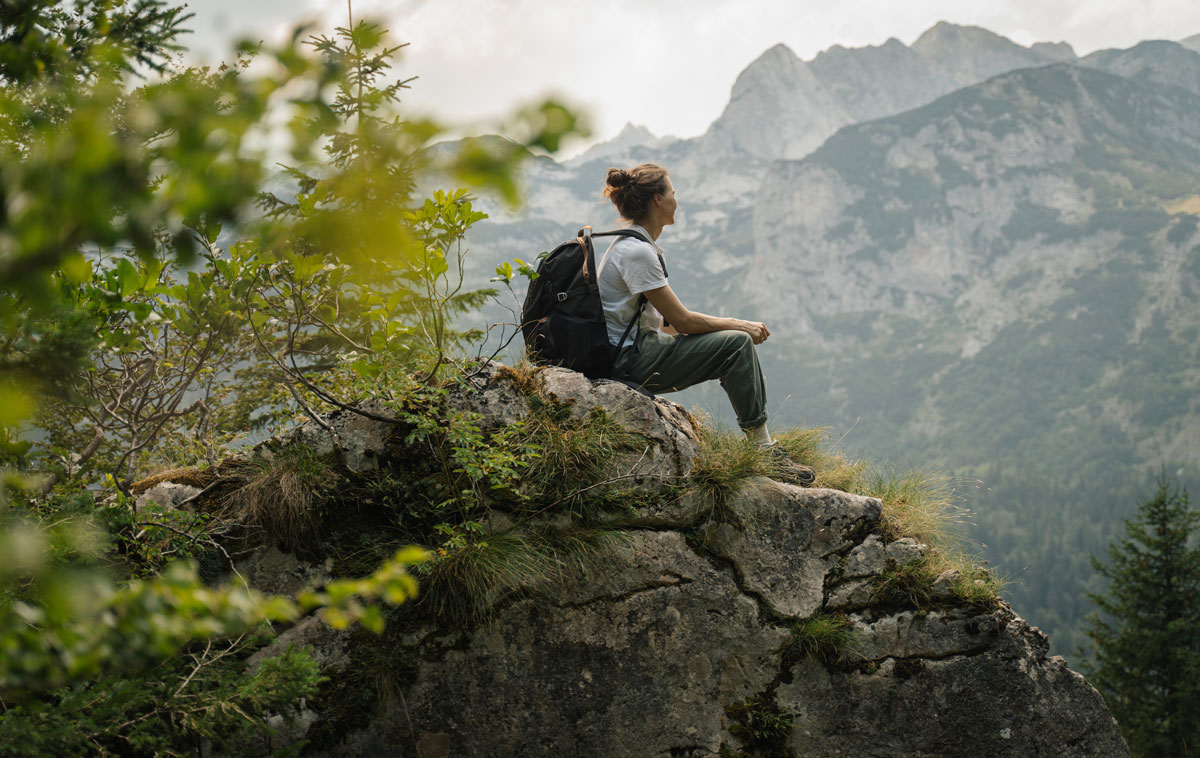
Life = Growth.

Where you aren't growing, you are slowly, almost imperceptibly, dying.

Make yourself that coffee now. Grab a pen and paper. Be brutally honest with yourself and answer:

  • Where and with whom am I growing, and where and with whom am I dying?
  • Who do I want to become? What kind of woman or man do I want to be? What does that person look like?
  • Imagine it is already December 2026. What have you achieved? What do you have, how do you live, and how do you work? How does the person who achieved all of this behave? How do they think?
  • What do I need to let go of to reach that goal? What has come to an end? Who or what can no longer be part of my life or career?

Now, for the most important questions:

  • Who or what is stopping me from achieving my desires? Which specific people, situations, or relationships?
  • Which of my own internal beliefs and fears are blocking me? Where am I standing in my own way?

After this reflection, things will become “clear as day.” Ask yourself one more thing: To become the person I want to be, what will I stop doing today, and what will I start doing? To whom or what will I say “NO,” and to whom will I say “YES”?

If your own insights scare you, that’s an excellent sign. Keep going! The changes you make now might hurt, but through that process, you are building the beautiful life you truly want. You are becoming wiser, stronger, and braver.


Things only change when you change.


You can have a phenomenal goal and all the resources in the world, but if something is blocking you from the inside and stress is threatening your health, you won't move an inch. As a coach specializing in stress management and mindfulness, I am here to help you turn that pressure into clarity and strength.

If you want my support in changing your life or career, I invite you to subscribe to this email list. Through the premium coaching content I create monthly, you can learn strategies for more success, health, and peace—living and working exactly as you’ve always dreamed, but perhaps never dared to try.

The new year brings new content, strategies, and special offers. My methodology is a unique blend of success strategies and mindfulness, because I know there is no sustainable success without health and inner peace.


🔴 To the ambitious leaders, professionals, and entrepreneurs at a crossroads:

If you are feeling the weight of the climb, remember—it is not too late.

You have the power to change your trajectory, and I am here to show you the path.

Quiet the noise. Lead the climb.

Start your climb here. Sign up for my regular insights on stress management, emotional resilience, and tools for personal and professional growth. Learn how to lead yourself and your life, not just your schedule.

👉📩 Join the Tribe


Before you go, I’d love for you to answer one thing: What is the biggest thing holding you back from becoming the person you want to be today?

Tell me in the comments—I read every single response.


Životni uspon: Šta ponijeti na vrh, a šta ostaviti u startu?

Želja da živimo bolje, budemo uspješniji i sretniji dočeka nas pred svaku Novu godinu. Osim pustih želja, dobro je malo pogledati se u ogledalo i zapitati se iskreno:

Gdje sam, šta sam, s kim sam i kakvi su zaista moji rezultati?

Online prostor je prepun savjeta. Svi nešto “pametuju” o tome kako treba živjeti i kako biti uspješan. Iskreno, ne treba Vam ničiji savjet. Vi ste dovoljno pametni i sposobni da postignete sve što želite. Vi najbolje poznajete sebe. Zato ova pitanja koja Vam šaljem danas služe samo da Vam pomognu da sebi lakše i brže razjasnite šta zaista želite postići – šta ostaje, a šta definitivno “leti” iz Vašeg života i karijere.

Kao certificirani Coach, životnom promjenom i uspjehom se bavim godinama, vodeći svoje klijente kroz duboku transformaciju kroz koju su unaprijedili ne samo svoje rezultate i zdravlje, već promijenili kompletan život i osjećaj s kojim se bude svakog jutra.

Poznato je da ljudi rijetko ostvare ono što požele za Novu godinu. Zato je moja preporuka da ne trošite vrijeme na to. Pustite da praznična euforija prođe. Jedite, pijte, radujte se ili otplačite – jer praznici su ponekad jako tužan period.

Kada se sve slegne, sjedite fino i popijte kafu sa sobom i odlučite šta želite dalje. Postavite ciljeve i krenite naprijed. Bitno je da znate da ciljeve ne treba postavljati zato što je to neki trend, već zato što je cilj rješenje Vašeg problema.

Uspješni ljudi znaju kristalno jasno šta žele i zašto to žele. Da biste sebe postavili na put uspjeha, dajem Vam par ključnih pitanja za pripremu.

Napravite sada sebi kafu i uzmite olovku i papir. Budite brutalno iskreni prema sebi i odgovorite:

  • Gdje i uz koga rastem, a gdje i uz koga ja umirem?
  • Ko želim postati? Kakva žena/muškarac želim biti? Kakva je ta osoba?
  • Zamislite da je već decembar 2026. Šta ste postigli? Šta sve imate, kako živite, kako radite, kako se ponaša ta osoba koja je sve to uspjela, kako ta osoba koja ste postali razmišlja?
  • Šta trebam da otpustim da bih postao ili postigao to što želim? Čemu je došao kraj? Ko ili šta više ne može biti dio mog života/karijere?
  • A sada najvažnija pitanja:Ko ili šta me sprječava da postignem to što želim? Koji tačno ljudi, koje situacije, koji odnosi? Koja moja unutrašnja uvjerenja i strahovi me blokiraju? Gdje sam ja sam_a sebi prepreka?

Nakon ove refleksije, biće Vam sve jasno “kao dan”. I odgovorite sebi na još jedno pitanje: Da bih postao_la/postigao_la to što želim, šta ću od danas prestati, a šta početi raditi? Čemu/kome u životu ću reći NE, a čemu/kome DA?

Ako su Vas nakon ovih pitanja uplašili Vaši lični uvidi, to je odličan znak. Samo naprijed! Možda će promjena koju ćete napraviti sada malo boljeti, ali tim procesom stvarate sebi predivan život, baš onakav kakav želite, a Vi ćete postati mudriji, snažniji i hrabriji.


Vi možete imati fenomenalan cilj i sve resurse, ali ako Vas iznutra nešto blokira i stres ugrožava Vaše zdravlje, nećete se pomjeriti ni milimetar. Kao Coach specijalizirala sam se za stres management i mindfulness, i tu sam da Vam pomognem da taj pritisak pretvorite u jasnoću i snagu i ostvarite svoj puni potencijal.

Ako želite uz moju podršku napraviti promjenu u svom životu ili karijeri, bilo bi dobro da se prijavite na ovu email listu. Kroz moj premium coaching sadržaj koji kreiram mjesečno za svoju zajednicu, možete naučiti strategije za više uspjeha, zdravlja, mira, i živjeti i raditi baš onako kako ste oduvijek maštali, ali do sada se niste usudili to postići ili niste znali kako da to postignete.

U novoj godini Vas čekaju novi sadržaji, strategije, podrška i specijalne ponude. Moj Coaching rad i metodologija je jedinstveni spoj strategija uspjeha i mindfulness prakse, jer znam da nema održivog uspjeha bez zdravlja i unutrašnjeg mira.


🔴 Za ambiciozne profesionalce, lidere i poduzetnike na životnoj raskrsnici:

Ako ste pod stresom, osjećate se usamljeno u svojoj patnji i pitate se “šta dalje” — ovo je poziv za Vas.

Nije kasno. Sada je pravo vrijeme da preuzmete kontrolu nad svojim životom i karijerom. Ja Vam mogu pokazati put i osnažiti Vas da pronađete svoj mir i uspjeh.

Započnite svoj uspon ovdje. Prijavite se za moje redovne strategije o upravljanju stresom, jačanju otpornosti i alatima za lični i profesionalni napredak. Naučite kako da upravljate sobom i svojim životom, a ne samo svojim obavezama.

👉📩 Pridružite se zajednici


Prije nego što zatvorite ovaj tekst, voljela bih da mi odgovorite na jedno pitanje:

Šta je to što Vas najviše koči da već danas budete osoba kakva želite postati?

Pišite mi u komentarima – čitam svaki Vaš odgovor.


Elena Babić-Đaković
Holistic Leadership and Transformation Coach

I empower high-achieving professionals, C-suite executives, and corporate teams to master stress, recover from setbacks, and achieve their ambitious goals. As a Holistic Leadership and Transformation Coach, I specialize in helping you make a lasting positive change in life or career, so you can finally thrive without sacrificing your well-being. My unique methodology blends NLP Life and Business Coaching with mindfulness practices, often conducted in the middle of nature. I bring a wealth of expertise and experience, holding certifications as a Life and Business Coach (ICI), a Mindfulness Trainer (In-Me), and an NLP Master (IN). Discover more

Follow me LinkedIn / You Tube / Instagram / Facebook

Stari grad Jeleč

Jeleč – povijesno mjesto

Jeleč se nalazi u jugoistočnom dijelu Bosne i Hercegovine, na području opštine Foča. Naselje je smješteno na nadmorskoj visini od 656 m u dolini Govze okruženo padinama Zelengore. Na lijevoj strani Govze protežu se slikovite litice Husada (1534 m/nv), a na desnoj vrleti Radomišlje (1606 m/nv).
Jeleč ima povijest dugu više od osam stotina godina i oduvijek je bio na raskrižju puteva trgovine, kultura, religija i imperija. Iza Gradine gdje je bio srednjovjekovni utvrđeni grad Jeleč nalazi se manja nekropola sa stećcima. U selu Ocrkavlje kod Miljevine u blizini ušća Govze u rijeku Bistricu pronađeni su ostaci rimske građevine i spomenika s natpisom (3. st.) koji je prenesen u Zemaljski Muzej u Sarajevu. Na tom lokalitetu se nalazi i veća nekropola sa stećcima. Sve ovo ukazuje na kontinuitet ljudske prisutnosti i naseljavanja u ovom kraju.

U doba vladavine Osmanske imperije, Jeleč postaje kasaba (varoš) sa mnogim dućanima, hanom i hamamom, džamijom sa kamenim minaretom i medresom.
O čemu svjedoči putopisno djelo Evlije Čelebije, osmanskog putopisca i diplomate (Evliya Çelebi, Istanbul 1611. – Kairo 1682.). Evlija je prvi put u Bosni boravio 1661. godine.
S obzirom na svoj strateški položaj, u ne tako davnoj prošlosti Jeleč je stradao u Prvom i Drugom svjetskom ratu. U agresiji na Republiku Bosnu i Hercegovinu 4. maja 1992. godine pretrpio je ogromna materijalna razaranja i brojne ljudske gubitke. Prije toga u Jeleču i okolnim selima bilo je oko 800 stanovnika a danas živi oko 50. Zbog teških okolnosti mnogi su se iselili u druga mjesta i inostranstvo. Uprkos svemu obnovljene su mnoge obiteljske kuće, osnovna škola i džamija Sinan-paše.
Pristup u Jeleč je asfaltnim putem od Miljevine (oko 5 km). Miljevina je rudarski gradić smješten oko 1 km nizvodno od ušća Govze u rijeku Bistricu. Nalazi se na magistralnom putu M18 Sarajevo – Foča.

”Jeleč pa Beč”

U doba vladavine Austro-Ugarska Monarhije u Jeleču su bile tabhane, zanatske radionice u kojima se štavila koža. Nakon obrade koža je slata u Beč za potrebe izrade odjeće, obuće i kožne galanterije. U tom periodu to mjesto je doživjelo svoj najveći prosperitet i blagostanje o čemu svjedoči izreka ”Jeleč pa Beč”.
Za vrijeme Kraljevine Jugoslavije u okolini Jeleča vršena je eksploatacija šume na Zelengori. Za potrebe transporta balvana i drvene građe izgrađena je šumska željeznica. Pruga je puštena u saobraćaj 1930. godine na relaciji: Brod na Drini – Miljevina – Rataja – Jeleč – Govza – Bukovik – Palež. Ukupna dužina ove pruge iznosila je 27 km. Također je izgrađen i odvojak sa ove pruge na relaciji: Rataja – Oteša – Ćatino jezero – Kadin most – Zaklop. Ukupna dužina pruge na ovom odvojku iznosila je 10 km.
Eksploatacija šume na ovom području nastavljena je u doba SFR Jugoslavije od 1946. – 1992. godine. U tom periodu muškarci su uglavnom radili na sječi šume, u rudniku mrkog uglja u Miljevini ili u ribnjaku na Krupici, dok su žene radile u ćilimari.  


Kamešnica, vrh Konj

Autor teksta i fotografija: Braco Babić

Planina Kamešnica

U nizu kojeg čine Ilica – Dinara – Troglav, Kamešnica je najmanje poznata i teško pristupačna planina. Veći njezin dio, s najvišim vrhom Konj, pruža se pravcem sjeverozapad – jugoistok u duljini oko 20 km. Počinje kao široka visoravan kod Vaganjskog sedla (1173 m/nv), gdje graniči s Prolog-planinom koja je povezuje sa Troglavom. Postepeno se izdiže kao Donja Kamešnica u jugoistočnom smjeru prema glavnom grebenu na kojem je najviši vrh Konj (1856 m/nv), nakon kojeg naglo gubi visinu i kao odsječena završava nad Buškim jezerom (716 m/nv).
Kamešnica je tipično planinsko područje dubokoga krša i razvijenim krškim oblicima, oskudno vodom i siromašno vegetacijom. Klimu u vršnoj zoni karakteriziraju oštre i duge zime, dok su ljeta kratka i prohladna s malo vedrih dana. Jedna od njenih najvećih karakteristika je relativno malo oborina, koje padnu uglavnom u obliku snijega i niske vlažnosti.
Zbog geografskog položaja, s jedne strane na udaru je mediteranske, a s druge strane kontinentalne klime. Kamešnica je stanište raznih biljnih i životinjskih vrsta, među kojima se ističe žuta sirištara – endemična biljka. Na prisojnim padinama (na hrvatskoj strani) vegetacija je oskudna, a na osojnima (na bosanskohercegovačkoj strani) razvijena je šuma bukve, jele i smreke.

Planinarenje na Kamešnici

Kamešnicu su prvi počeli posjećivati članovi HPD ”Mosor” iz Splita, početkom tridesetih godina prošlog stoljeća. To planinarsko društvo sagradilo je 1934. planinsku kuću nad Kurtagića dolcem, na putu od Vaganjskog sedla prema Konju. Naredne godine, 1935., sagradili su planinsku kuću na Vagnju. Obje te kuće stradale su u Drugom svjetskom ratu, a nisu obnovljene jer je to područje pripalo općini Livno (u BiH). Članovi HPD ”Mosor” iz Splita  nastavili su, bez obzira na to, planinarsku i skijašku tradiciju i često dolazili na Kamešnicu.  

Najpovoljnije vrijeme za planinarenje na Kamešnici je u proljetnim i jesenjim mjesecima. Tad su temperature zraka puno ugodnije na usponu i ne treba nositi previše vode za piće kao u ljetnim danima. U zimskom periodu uspon na najviši vrh Kamešnice je zahtjevan i rizičan posebno u uvjetima ako su temperature niske i puše jak vjetar. Istovremeno, u slučaju da zapada veća količina snijega, može nastati mećava koja bitno otežava kretanje i orijentaciju posebno na vršnom grebenu ili nešto niže na krševitom terenu gdje su škrape obrasle grmljem. Također od veće količine svježe napadalog snijega, koji se još nije slegao, može se formirati lavina koja predstavlja potencijalnu opasnost. Iz tog razloga treba biti oprezan posebno na strmim padinama i pod vršnim grebenom na kojem je najviši vrh Konj.
Dana 23.2.2013. godine na zimskom usponu prema najvišem vrhu Kamešnice – Konj (1856 m/nv), dogodila nesreća kad je snježna lavina zatrpala četvero alpinista iz Hrvatske. Lavina se formirala na strmoj padini, od svježe napadalog snijega. Istog dana trojica su alipinista pronađena i zbrinuta, u splitsku i livanjsku bolnicu. U potragu za četvrtim alpinistom, Edvardom Reteljom (52), bilo je uključeno više od 150 gorskih spašavatelja iz Hrvatske i BiH. Tek sutradan poslijepodne pronađeno je njegovo tijelo, u podnožju 75-metarske litice preko koje je prošla lavina.

Planinarski uspon na vrh Konj

Tura: selo Podgradina – izvor Ozrna – Studeno vrilo – pl. kuća “Pešino vrilo” – Rovanje – vrh Konj. Uspon je srednje težine. Ukupno vrijeme sa povratkom traje oko 7 sati hoda.

Ovo je uobičajeni i najkraći planinarski uspon na vrh Konj iz sela Podgradina kod Livna. Ko želi da bolje upozna planinu Kamešnicu krenut će od Vaganjskog sedla (1173 m/nv) na cesti Livno – Prolog – Sinj ili od planinske kuće “Orlovac” (673 m/nv) na Donjim Koritima (u Hrvatskoj).

Selo Podgradina je smješteno na nadmorskoj visini od 725 m, u blizini crpne stanice na brani koja stvara Buško jezero. Iz pravca Livna nakon brane skrenuti desno na seosku cestu. Polazna tačka uspona je odmah iznad sela kod mostića na potoku gdje se može parkirati automobil. Preći mostić i skrenuti desno na stazu prema izvoru Ozrna (sa koritom za vodu). Izvor se nalazi ispod jedne velike stijene i već stoljećima pruža pitku vodu stanovnicima sela.
Od izvora započinje uspon pješačkom stazom koja je obilježena sa putokaznim tablama i planinarskim markacijama. Staza prolazi kroz gustu bukovu šumu. Dobro je prohodna i vodi Gagića dragom kojom protiče potok. Nakon 30 minuta hoda stiže se do raskrižja za Brljušu i Sinj (lijevo). Raskrižje je obilježeno sa putokaznim tablama. Od raskrižja nastaviti stazom i nakon 1 sat hoda stiže se na mali proplanak gdje je smještena planinarska kuća “Pešino vrilo” (1400 m/nv). U blizini se nalazi izvor (sa koritom za vodu) po kojem je ova kuća dobila naziv. Kuća je pod upravom PD “Kamešnica“ Livno. Važno je napomenuti da je ovo posljednji izvor prema vrhu i treba natočiti dovoljne količine vode za piće. Od izvora Ozrna u Podgradini do pl. kuće “Pešino vrilo” potrebno je 1 sat i 30 minuta hoda.  

Od pl. kuće nastaviti uspon stazom kroz šumu oko 500 m. Po izlasku iz šume staza prelazi krševiti teren do vidikovca sa kojeg se pruža pogled na Buško jezero, planine Cincar i Tušnicu, Livno i mnoga seoska naselja u podnožju Kamešnice. Od vidikovca dalje staza vodi preko Rovanja. Staza je dobro ugažena na strmoj padini prošarana travnatim busenjem i niskim grmovima. Po izlasku iz strmine na greben nastaviti u pravcu sjeverozapada. Do vrha se stiže ogoljenim stjenovitim grebenom. Vrh je označen većim kamenom s natpisom imena i nadmorskom visinom. Kod ovog kamena u blizini nalazi se upisna kutija sa sveskom posjetilaca i žigom ugrađenim u stijenu.

Kad je vedro nebo sa najvišeg vrha Kamešnice – Konj, pruža se odličan pogled u svim smjerovima. Kao na dlanu vidi se Livno, Livanjsko polje sa mnogobrojnim selima i gotovo cijela Sinjska krajina. Jasno se vide i mnoge planine: Šator, Staretina, Mala i Velika Golija, Slovinj, Cincar, Tušnica, Malovan, Stožer, Ravašnica, Raduša, Ljubuša, Vran-planina, Čvrsnica, Zavelim, Biokovo, Mosor, Svilaja i Dinara. Također se vide jezera – Buško, Lipsko i Mandečko, smještena u blizini Kamešnice. Od pl. kuće “Pešino vrilo” do vrha Konj potrebno je 2 sata hoda.

Buško jezero

Buško jezero nalazi se na području općina Tomislavgrad i Livno. Smješteno je podnožju istočne strane Kamešnice, na nadmorskoj visini od 716 m. Zapremina akumulacijskog bazena je 782 hm³. Jezero je površine 55,8 km², i dubine do 17 m. Površinom i zapreminom najveća je vještačka akumulacija u Bosni i Hercegovini i jedna od najvećih u Europi. Jezero je nastalo potapanjem Buškoga blata, sedamdesetih godina u prošlom stoljeću. Voda iz jezera koristi se i za potrebe hidroelektrane “Orlovac“ u Hrvatskoj. Preko crpne stanice kod Podgradine i dnevnog kompenzacijskog bazena Lipa voda se usmjerava kroz tunel do turbina. Tunel duljine oko 12 km i prokopan je kroz središnji masiv Kamešnice.
Oko Buškog jezera nalaze se mnoga seoska naselja: Podgradina, Golinjevo, Prisoje, Vrilo, Grabovica, Korita, Zidine, Čule, Škoj, Gale, Kurtovine, Rašeljke, Liskovača i dr.
Na Buškom jezeru, nalazi se Eko-selo Grabovica turističko odredište poznato po autentičnoj gradnji od kamena, bogatim sadržajima poput restorana, vila, mini zoo vrta, jahačkog kluba, sportskih terena, a nudi i smještaj, staze za šetnju, te aktivnosti poput jahanja i vožnje biciklom. Također na Buškom jezeru u blizini sela Zidine i Korita nalazi se Duhovni centar Karmel sv. Ilije, jedini muški karmelićanski samostan u Bosni i Hercegovini.
U ljetnom periodu Buško jezero je pogodno za kupanje i sportove na vodi. Jezero je poribljeno (šaran, pastmka, podbila, babuška, klijen i som).


Stari grad Prusac – Biograd, Akhisar

Autor teksta i fotografija: Braco Babić

Srednjovjekovni utvrđeni grad Prusac

Osmanlije zauzimaju Prusac 1463. godine. Iste godine u jesen vojska hercega Vladislava Hercegovića (najstariji sin hercega Stjepana Kosače) osvaja grad i ponovo ga stavlja pod svoju upravu. Konačno Prusac osvaja Mustaj-beg (sin Skender-bega) 1502. godine.
U ugarsko-turskim ugovorima iz 1503. i 1519. godine spominje se pod imenom Biograd. U svim ispravama i spisima na turskom jeziku piše Akhisar, što je doslovni prijevod za Biograd.
Grad je više puta proširivan i utvrđivan. Imao je stalnu posadu na čelu sa dizdarom. Nakon što je izgubio strateški značaj napušten je 1838. godine. U 18. vijeku unutar grada sagrađena je sahat-kula, visine 10 m. Po dolasku austrougarske vojske u Bosnu 1878. godine, tvrđava je kratko vrijeme korištena u vojne svrhe.

Prusac – povijesno mjesto

Prusac je naseljeno mjesto u općini Donji Vakuf, Bosna i Hercegovina. Nalazi se oko 5 km južno od Donjeg Vakufa. Naselje broji oko 1200 stanovnika. Za vrijeme osmanske vladavine Bosnom jedno vrijeme Prusac je bio kulturno i vjersko središte Bosanskog pašaluka. Bila je to živopisna čaršija sa osam mahala koje su imale svoje dućane, svoje zanate kao što je tabački, svoje obrazovanje, dvije medrese (srednje škole) i visoku školu – Darul Hadiz, Hasan Kjafije Pruščaka.
U blizini Prusca (oko 7 km) nalazi se najveće dovište muslimana u Bosni i Hercegovini – Ajvatovica. Tradicionalna vjersko-kulturna manifestacija koja se održava više od pet stotina godina u mjesecu junu. Ajvatovica je specifičnost bosanskih muslimana, jer ima autohtoni karakter, prerastao iz višestoljetne tradicije molitvi za kišu, plodnost i zaštitu ljetnih usjeva.

Tri nacionalna spomenika BiH u Pruscu

1. Povijesno područje – Stari grad Prusac proglašen je 2004. godine nacionalnim spomenikom Bosne i Hercegovine. Nacionalni spomenik čini: tvrđava, obor, Donji grad i pokretno naslijeđe koji se nalazi u Arheološkoj srednjovjekovnoj zbirci Zemaljskog muzeja Bosne i Hercegovine u Sarajevu.

2. Graditeljska cjelina – Handanija džamija u Pruscu (Handan-begova, Handan-agina, Hajdar Ćehajina ili Čaršijska džamija) proglašena je 2005. godine nacionalnim spomenikom Bosne i Hercegovine. Nacionalni spomenik čini: džamija i mezarje u okviru haremskog zida, te haremski zid sa ulaznom kapijom i česmom.    

3. Graditeljska cjelina – Hasana Kjafije džamija (Pruščakova džamija) proglašena je 2009. godine nacionalnim spomenikom Bosne i Hercegovine. Nacionalni spomenik čini: džamija i džamijski harem sa nišanima, turbe Hasana Kjafije, objekat medresa i mehkema, i pokretnog naslijeđa koje čine levha izrezbarena u drvetu i kamena ploča – natpis o obnovi sultan Bajezidove džamije.


Planinsko cvijeće (7. dio)

Od davnina su se ljudi divili planinskom cvijeću koje raste na zelenim pašnjacima i planinskim visovima gdje je izloženo niskim temperaturama, jakim vjetrovima i ljetnim pljuskovima kiše koje ga zalijevaju, a ponekad ga prekrije i susnježica. Unatoč prisutnosti surovih uvjeta ono prkosno opstaje i ljepotom svojih cvijetova krasi planinu a nama planinarima predstavlja nagradu za uloženi trud pri usponu. 
Fotografije planinskog cvijeća koje sam snimio na mnogim planinama biće ovdje objavljene u narednih nekoliko nastavaka. Svaka galerija sadrži 30 odabranih fotografija i klikom na bilo koju od njih možete saznati naziv planine na kojoj raste ovo cvijeće.   

Autor teksta i fotografija: Braco Babić

Photo Gallery 1 – 10

Photo Gallery 11 – 20

Photo Gallery 21 – 30


Naslovna slika: Maglić (2386 m/nv) – najviši vrh Bosne i Hercegovine