
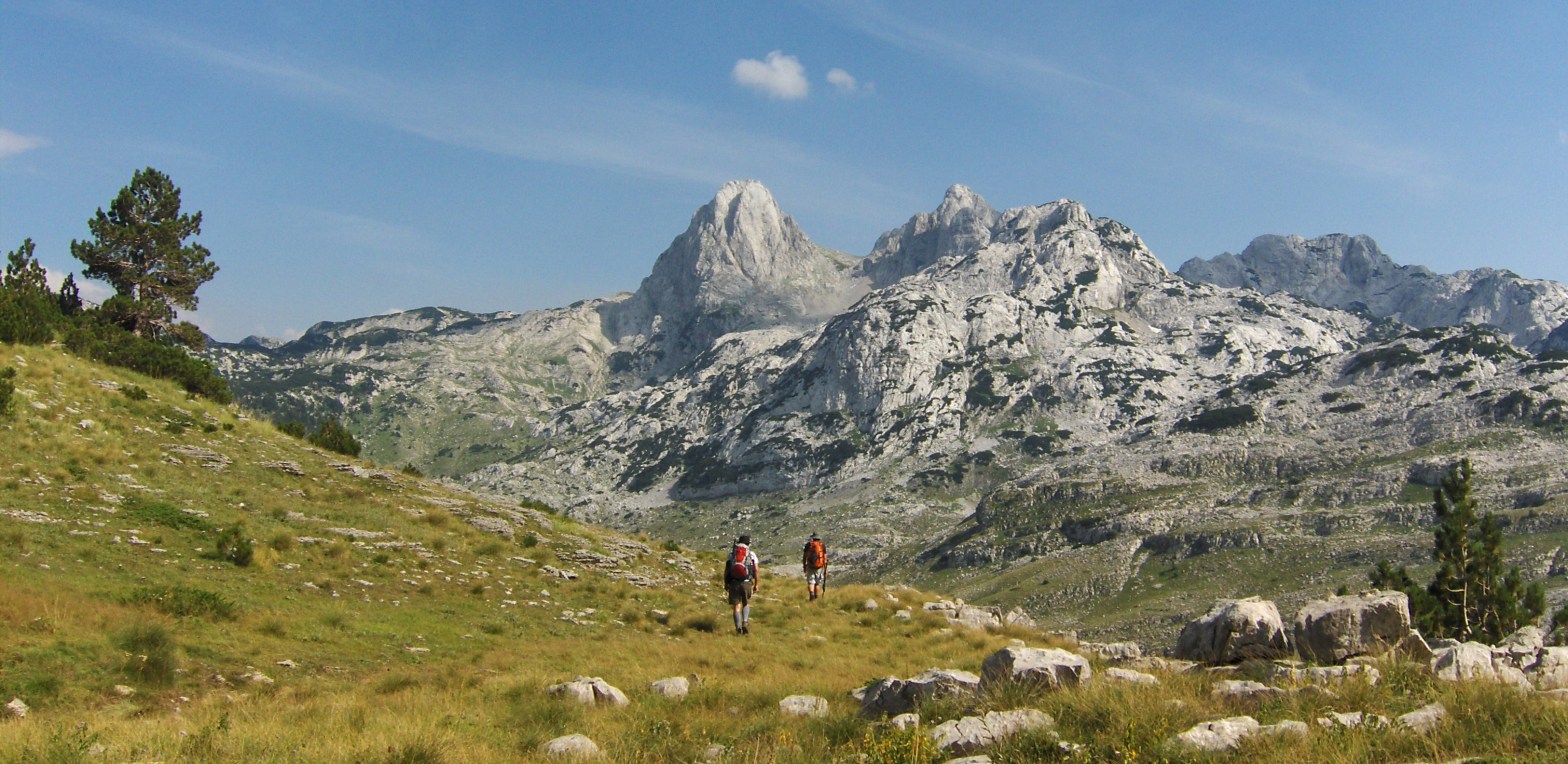
The adventures of tobacco smugglers are woven into the very fabric of our mountain legends. This story serves as a tribute to those men and the uncertainties they faced in the wild. Driven by a desire to keep this heritage alive and save it from oblivion, I retraced the paths they traveled most often.
Weighed down by heavy backpacks, these smugglers set out across the mountains with deep trepidation, never knowing if they would reach their destination with their cargo. It was a perilous adventure where lives were easily lost, and their names frequently appeared in the “dark chronicles” of the newspapers.
The ultimate challenge was transporting the tobacco to Sarajevo. Not only was it a long journey, but it required crossing several formidable mountain massifs: Prenj, Visočica, Treskavica, and Bjelašnica.
Text and photography by: Braco Babić
The Monopoly and the Secret of “Škija”
After the occupation of Bosnia and Herzegovina, the Austro-Hungarian authorities proclaimed a Monopoly Law, placing the entire production, processing, and sale of tobacco under strict state control. Farmers could only grow tobacco for personal use; any sale required a tax known as “mururija”. Faced with extreme poverty, local peasants were forced to find ways to survive, leading them into the world of tobacco smuggling. In those days, tobacco could not be spoken of by its name; among the people, it was known by the secret code: “škija”.
It was a lucrative but incredibly dangerous business that demanded great resourcefulness and the skill to outsmart the gendarmes (local police). It required hard labor from the entire family—from children to the elderly. The avan (a traditional tobacco mortar) and the cutting machines were kept in absolute secrecy, hidden in cellars or deep caves.
The gendarmes had their own methods of tracking. The blade of the avan had to be sharpened and forged periodically by local blacksmiths. These blacksmiths, often in trouble with the law themselves, would frequently strike deals with the gendarmes—as soon as they sharpened a blade for a smuggler, they would report it to secure their own leniency.
The Trail of “Yellow Gold”
To avoid the ambushes set by the authorities, smugglers chose nearly impassable trails high in the mountains, carrying immense loads on their backs. The routes from Western Herzegovina led to Dalmatia, Zagora, Krajina, Posavina, and wider Bosnia—mostly to major cities like Split, Dubrovnik, Banja Luka, and Sarajevo, where the demand for “yellow gold” (as passionate smokers fondly called škija) was high.
Loaded with heavy backpacks, they crossed the mountains with deep trepidation. It was a perilous journey where lives were easily lost, and stories of captured smugglers filled the “dark chronicles” of the newspapers. To reach the coast, they navigated goat paths over the rugged Biokovo massif.
However, the hardest journey was to Sarajevo. Besides the great distance, it required crossing the formidable peaks of Prenj, Visočica, Treskavica, and Bjelašnica. These are high-altitude mountains where the weather shifts violently due to the collision of Mediterranean, Continental, and Alpine climates. In the summer, you can experience all four seasons in a single day!
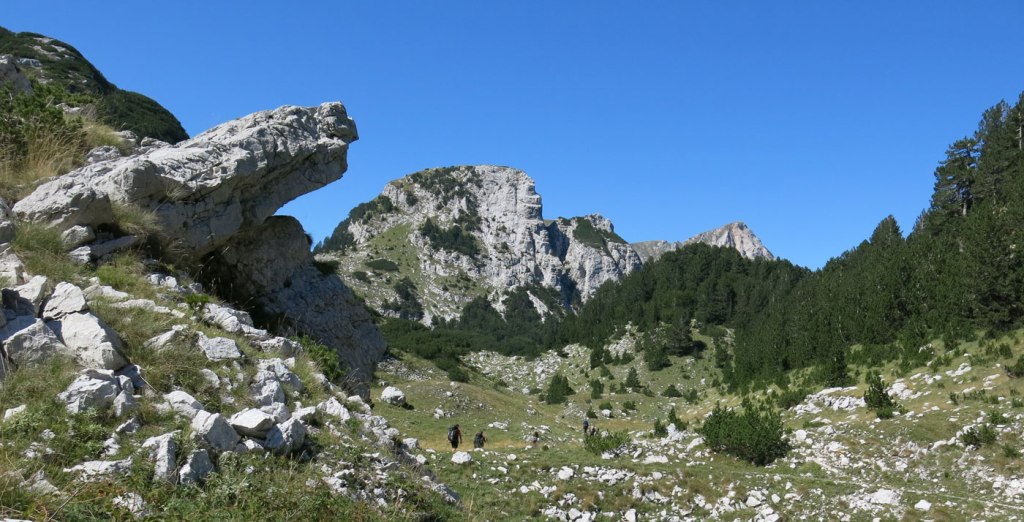
Survival of the Fittest: Avoiding Ambushes and Wild Beasts
The rugged terrain and harsh weather were not the only obstacles; constant danger lurked in the form of gendarme ambushes and attacks by wild animals. To ensure their time in the mountains didn't last longer than planned, smugglers solved all problems “on the go,” without pauses or delays. Crossing these massifs took several days of grueling, non-stop hiking.
Tobacco smuggling continued year-round, regardless of the season or the ferocity of the mountain storms. During the Austro-Hungarian Empire and the Kingdom of Yugoslavia, ambushes were set by the Gendarmes, while in Socialist Yugoslavia (SFRJ), it was the People’s Militia. If they were caught in an ambush, smugglers often resorted to firearms to save their lives and protect their precious cargo.
To stay safe, they constantly changed their routes to cover their tracks. Their path was a sacred secret; not even their closest family members knew which trail they would take.
Mastering the Terrain
Smugglers often set out during the worst weather, hoping the fog and storms would deter the authorities from setting ambushes. Sadly, this meant many lost their way in the mist, froze to death, or perished in snow avalanches.
To conquer the unforgiving terrain while carrying massive loads, these men had to be exceptionally strong, enduring, and expert navigators. They knew these mountains like the back of their hands—every spring, cave, and shepherd’s hut. However, they often avoided these spots because they knew that was exactly where the authorities would be waiting.
Sometimes, they would hire locals from the mountain foothills as guides or extra carriers for a high fee. Over time, some of these locals became independent and started smuggling for their own profit.
The Secret Streets of Sarajevo
After overcoming the mountain hardships, the smugglers would finally arrive in Sarajevo, heading to a specific, narrow street below the Kovači neighborhood. It was common knowledge in the city that “under the table” tobacco was sold here. Frequent raids were conducted, but the seized loot was often insignificant. The smugglers clearly had precise intelligence on when the law would arrive.
They employed their own lookouts who watched every entrance to the street. At the slightest hint of trouble, the smugglers would vanish into side alleys, waiting for the patrol to pass before returning to business as if nothing had happened. They only kept two or three “shirts” of tobacco on them at a time; the rest was hidden in the homes of trusted associates nearby.
The “Shirt” as a Measure of Trade
In this secret market, the customer was the one to approach first, quietly asking: “How much for a shirt?” “Škija” (tobacco) was packed and sold in boxes originally meant for men's dress shirts, which became the standard retail measure of the time. For larger, pre-arranged orders, the smugglers would deliver directly to the buyer's address. Usually, the entire load was sold within two or three days. After that, they would take a train or bus back to Mostar, take a short rest, and then begin the perilous adventure all over again.
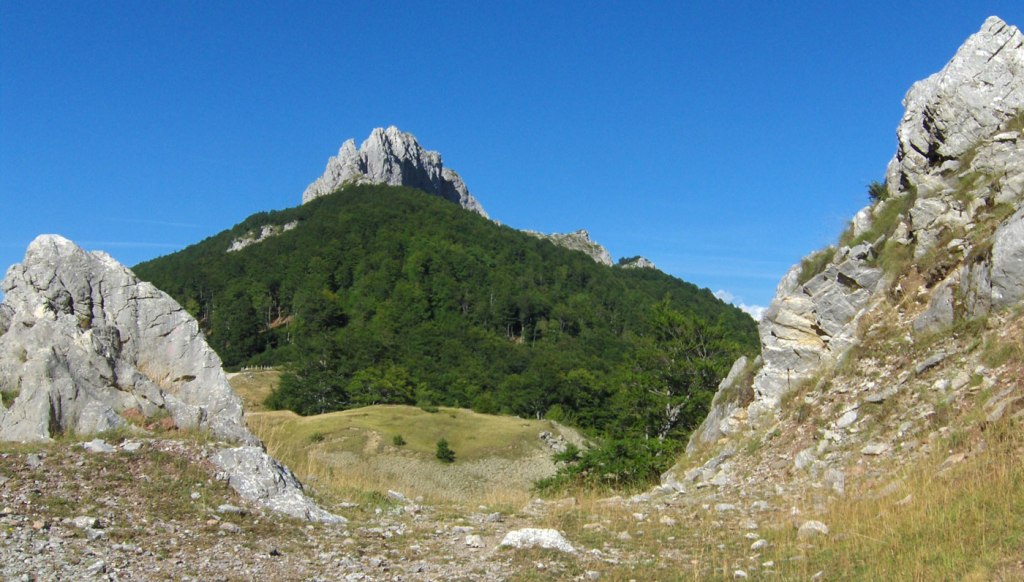
A Face-to-Face Encounter: A Mountaineer’s Tale
Tobacco smugglers chose their paths with such skill that hikers rarely crossed their tracks. However, a veteran mountaineer from Sarajevo, Vinko Tomičić, shared with me a chilling story of a face-to-face encounter from the mid-1950s.
“It was the mid-1950s. The summer heat in Sarajevo was so suffocating that my friend Đuro Gϋrt and I decided to seek refuge in the high peaks of Prenj. I remember reaching Rujište under a scorching sun, our backpacks heavy. Two black Mercedes sedans were parked outside the mountain hut—a rare sight in those days. We soon learned that Džemal Bijedić, a high-ranking official, was there. He loved the mountains; it was the only place where he could truly escape politics and just be a mountaineer among mountaineers.
After a night at Rujište, we pushed on toward Jezerce. We were joined by Professor Stevo Jokanović and a young couple on their honeymoon. That night is etched into my memory forever.
We were sleeping in the attic of the hut. In the dead of night, the creak of the front door downstairs snapped us awake. Peering through the narrow gaps in the floorboards, all we could see were the glowing tips of several cigarettes. In the pitch black, faces were invisible. They spoke in hushed, urgent whispers—a dialect we couldn't quite catch. Back then, the mountains were still hiding remnants of rogue units from the war. We weren't just curious; we were terrified for our lives.
Professor Stevo, the eldest and wisest of us, whispered a plan: ‘Đuro, Vinko… go down there. Invite them up for coffee and brandy.’
My heart was pounding against my ribs as we descended into that dark room. We delivered the invitation. Immediately, one of them—their leader—stood up and followed us back to the attic. He didn't use his hands to open the door; he pushed it open with the barrel of his automatic rifle.
As the candlelight hit him, I saw a giant of a man. Broad-shouldered, with a thick mustache and skin bronzed almost black by the mountain sun. He sat next to Stevo, and they talked quietly while sharing a flask. Before leaving, he shook Stevo’s hand and left a small package of ‘škija’ on the table.
Then, he turned to the rest of us. He looked us dead in the eye and, without even taking the cigarette out of his mouth, spoke through clenched teeth:
‘Eto ljudi, dogovorili smo se. Niste nas vidjeli—nismo vas vidjeli.’
(So, we have a deal. You didn't see us—we didn't see you.)
None of us dared to move for the rest of the night. We didn't even dare to go to the restroom. When the sun finally rose, they were gone like ghosts. Stevo looked at us and gave us one final command: ‘Those were tobacco smugglers. You are never to speak a word of this to anyone. Not even to your families.’
And for a long time, we didn't. But the mountains never forget.”
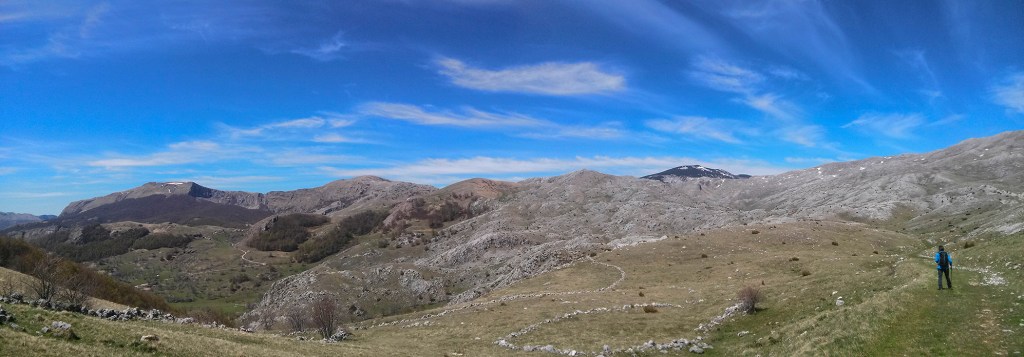
A Memory from Bjelašnica: When Stories Get Too Real
While preparing this article, a memory from my own journey came back to me—a moment that shows just how deeply these legends are rooted in our mountain culture.
It was the early 1980s. A thick, soupy fog had swallowed Mount Bjelašnica as we arrived at the Mrtvanjske Stanare mountain hut. It was a Saturday, but surprisingly, the caretaker wasn't there—a rare occurrence back then. The main entrance was locked. As the rain began to pour, all six of us squeezed into the small windbreak at the side entrance, a space barely measuring 2 x 2 meters.
We huddled on the floor, placing a wide wooden plank across our knees to serve as a makeshift dining table. Our friend, the late Avdo Jelačić, was prepared as always. He carried a small gasoline stove, a pot, a few findžans (traditional coffee cups), and a bag of ground coffee in his backpack. He carefully set the stove on the plank and warned us: “Nobody move until the water boils!”
As the coffee started to heat up, someone asked Avdo to tell us about his own encounters with tobacco smugglers. Avdo was the eldest among us, a veteran who had started mountaineering as a boy back during the Kingdom of Yugoslavia.
He became so immersed in his storytelling—and we were so captivated by his words—that none of us noticed the pot boiling over. Suddenly, the scalding water splashed onto Avdo’s hand. He jumped from the pain, accidentally flipping the plank and sending the stove, the coffee, the cups, and all our food flying into the mud.
In that moment, he let out a curse so loud and colorful directed at the smugglers that we teased him for years, saying every smuggler in Western Herzegovina must have heard him!
Avdo is no longer with us, but I fondly remember our climbs together and this little mishap that brought the legends of the trails to life in the most unexpected way.
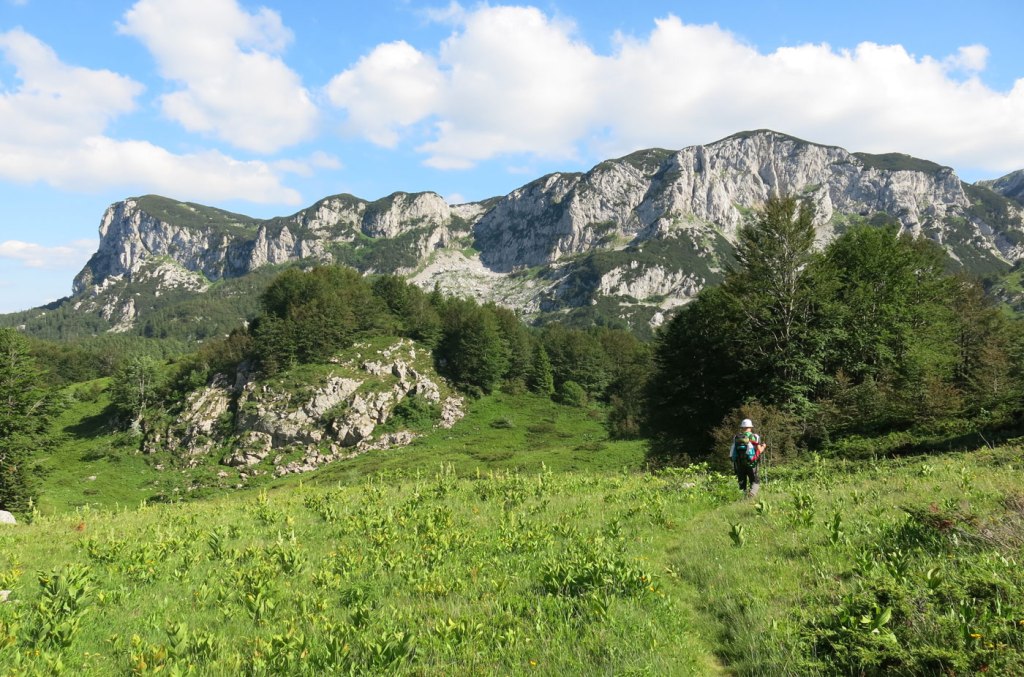
Among the countless stories of tobacco smugglers from the last century, one stands out for its wit and audacity. It’s a tale of a woman named Mare and an investigator who tried to break her story.
“Comrade Mare, tell me again—what was the name of the man you were delivering this tobacco to?” the investigator asked.
For the second time, Mare repeated a fabricated name and her entire story of how she had managed to bring a massive backpack full of tobacco into Sarajevo. In the early 1970s, a haul like that was a small fortune.
The investigator was persistent, wanting to see if Mare would slip up or change her defense. He leaned in once more: “Comrade Mare, tell me one more time… what was his name?”
Mare, realizing she had nothing left to lose, shot back with pure honesty:
“Comrade Investigator, you truly are a madman! Back home, we tell something to small children once and they remember it. I’ve told you three times now, and you still can't get it through your head!”
Stunned by her fearless and blunt response, the investigator did something unexpected. He ordered that her backpack full of tobacco be returned to her. He even promised that from that day forward, she could smuggle tobacco into Sarajevo undisturbed. “If anyone gives you trouble,” he said, “tell them to call me, and I’ll handle it.”
Even the law could not help but admire the resourcefulness and grit of a woman fighting to feed her family.
The Summer Gendarmerie Outposts
Across the Dinaric Alps, the remains of stone structures stand as silent witnesses to the past. These outposts were known locally as “karaula” (from the Turkish karavulhana – guardhouse) or “pandurica” (from the Hungarian pandúr – guard). Their primary purpose was the surveillance and interception of tobacco smugglers, illegal loggers, and poachers.
Today, the ruins of these summer outposts can still be found at various strategic points across the mountains:
- Mount Prenj: Gvozdine (965 m a.s.l.) and Rujište (1050 m a.s.l.)
- Mount Treskavica: Čelina (1220 m a.s.l.), Valje (1453 m a.s.l.), and Rogoj (1315 m a.s.l.)
- Mount Bjelašnica: Bijele Vode (1420 m a.s.l.) and near the village of Umoljani (1390 m a.s.l.)
- Mount Radovan: Near the iron mine (1200 m a.s.l.)
- Mount Lelija: Near Jablan Vrelo (1588 m a.s.l.)
- Mount Zelengora: At the Orlovačko Lake crossroads (1500 m a.s.l.) and the entrance to Suha (700 m a.s.l.) near Tjentišta
- Mount Raduša: Above Vilića Gumno (1409 m a.s.l.) and below Raduški Kamen/Triskavac (1486 m a.s.l.)
- Mount Jahorina: Near the village of Pavlovac (1402 m a.s.l.) and at Varcarovine above the Duboka stream (1126 m a.s.l.)
- Sarajevski Ozren: Near Vučja Luka on the path to the mountaineering hut (1396 m a.s.l.)
- Olovo-Kladanj Pass: On the road from Olovo to Kladanj (996 m a.s.l.)
- Ulog & Romanija area: On the hill above the village of Obrnja near Ulog (1324 m a.s.l.), at Vučja Brda above the village of Romani (1253 m a.s.l.), and on Kukor hill above Gornja Ljubogošta (978 m a.s.l.)
- Igman area: On the road from Hadžići toward Igman, near the Lokve crossroads (1144 m a.s.l.)
- Željeznica Canyon: Above the Krupačke Stijene (800 m a.s.l.)
IN MEMORIAM
Prof. Dr. Stevo Jokanović (1892–1979)
Born in Doboj, where he completed high school, he graduated from the Faculty of Law in Budapest, earning his Doctorate in Legal Sciences in 1920. Following his education, he practiced law in several cities across Bosnia and Herzegovina. Shortly before World War II, he worked in Belgrade for a brief period before being expelled. After the war, he returned to Sarajevo, working first for the Government of the People's Republic of Bosnia and Herzegovina, then as a judge, and following his retirement, as a lawyer until the end of his life. Before World War II, he was a member of the mountaineering organization and, as an active mountaineer, visited a great number of mountains both at home and abroad. After the war, he was a member of the Mountaineering Society (PD) “Bjelašnica” Sarajevo. From June 1954 to October 1956, he served as the President of the Mountaineering Association of Bosnia and Herzegovina. In addition to numerous social recognitions, he was awarded the Order of Labor of the SFRY and the Order of Merit for the People. He passed away in Sarajevo in 1979.
The tobacco smugglers’ trails are now silent, reclaimed by the wind and the mountain grass. But the stories of their resilience, and the paths they carved through the Dinaric Alps, remain an inseparable part of our heritage.
Join me next time as we continue to explore these hidden histories.
✨ New stories from the mountains are published every Wednesday in English. Follow the blog and stay tuned for the next adventure!
Cover Photo Description: Mount Prenj: View from Privor (1540 m a.s.l.). Peaks from left to right: Otiš (2097 m a.s.l.), Zelena Glava (2103 m a.s.l.), Mali Otiš (2000 m a.s.l.), and Botini (2015 m a.s.l.).
 PLANINARENJE sa Bracom Babićem